Dove Beauty is a well-known brand founded in 1957 (Unilever). The first product Dove ever sold was their beauty cleansing bar (Unilever). This bar was unique at the time because it utilized milder cleansers and moisturizing cream, unlike other products at the time (Unilever). Over the years, the brand grew, eventually reaching 139 countries and over 60 million customers (Unilever). As of 2023, the Dove company is worth more than 6.47 billion, making it one of the world’s largest cosmetic and personal care companies (Petruzzi, 2023).
Most Americans know the brand today because of its female-focused marketing campaigns (Thiana, 2023). Dove’s goal is to promote all women, including female-identifying and non-binary people, and to redefine beauty standards, making the world more positive for everyone (Unilever).
The main marketing campaign that Dove runs is called the ‘Real Beauty’ campaign, which started in 2004. As part of this campaign, Dove runs the self-esteem project, which utilizes lessons in schools and workshops to inspire women to feel more confident in their bodies (Unilever, paragraph 6). The campaign captured real women and included more diversity than other marketing campaigns (Unilever).
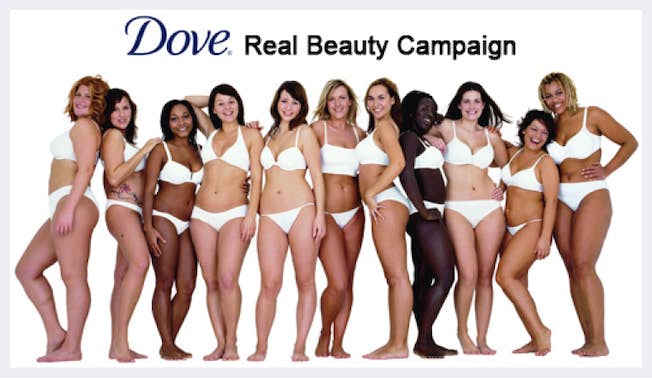
Looking from the outside, this seems like a wonderful message and an excellent marketing strategy. So, what went wrong in 2017 when they debuted new ads for the Real Beauty campaign?
Cross-cultural communication applies not only to marketing internationally but also domestically. Dove’s biggest failure was its failure to understand how to communicate with the diverse populations who use its products. The ad in question was a black woman taking her shirt off to reveal a white woman (Lozano, 2022).

The original goal of the ad was to show how each race gets positive benefits from the product they were advertising. However, the methodology used to showcase this change received heavy backlash from the public (Lozano, 2022).
For a brand that is usually on the pulse, it was surprising that Dove would drop the ball this hard. The main reason is that this particular ad lacked an understanding of its diverse audience (Lozano, 2022). When Dove turned a black woman into a white woman in their ad and used the tagline “visibly more beautiful,” it gave the impression that Dove preferred white people over black people. (Lozano, 2022).

Read more here.
Dove also struggled to present an apology that felt authentic to their audience rather than defensive (Lozano, 2022). Dove did not immediately learn from their mistake in this ad and continued releasing ads that seemed tone-deaf, which was very unusual for the brand (Lozano, 2022). It also made consumers feel like Dove was lying about their mission of empowering women (Lozano, 2022).
Moving forward, Dove learned from their mistake and focused more on listening to their consumers (Lozano, 2022). The newer ads have focused more on how beauty standards negatively affect women (Dove, 2023). The brand is working toward more inclusion and aligning itself closer with its values.
If they continue listening to their consumers, then Dove should be on the road to better communication with their audiences.
Works Cited:
Dove (2023, April 26). Cost of Beauty: A Dove Film | Dove Self-Esteem Project. Dove Beauty. https://www.youtube.com/watch?v=L3qc6QjfJyc
Lozano, C. (2022, November 12). Dove’s 2017 Real Beauty Campaign: Why It Crashed and Burned. Personal Blog. https://carolinelozano.com/doves-2017-real-beauty-campaign-why-it-crashed-and-burned/
Petruzzi, D. (2023, September 26). Global Brand Value of Dove From 2016 to 2023. Statista. https://www.statista.com/statistics/1010915/dove-brand-value-worldwide/
Thiana (2023, October 3). Biggest Multicultural Marketing Fails. PHU Concepts. https://phuconcepts.com/biggest-multicultural-marketing-fails/
Unilever (N.d.). Dove. Unilever. https://www.unilever.com/brands/beauty-wellbeing/dove/#:~:text=Dove%20started%20its%20life%20in,revolutionary%20new%20beauty%20cleansing%20bar.
One reply on “Why Dove’s Marketing Campaign Failed”
[…] made by various companies. I’ve examined how PepsiCo incited riots in the Philippines and how Dove’s beauty bar campaigns fell short. However, I’m eager to explore additional instances where major brands […]