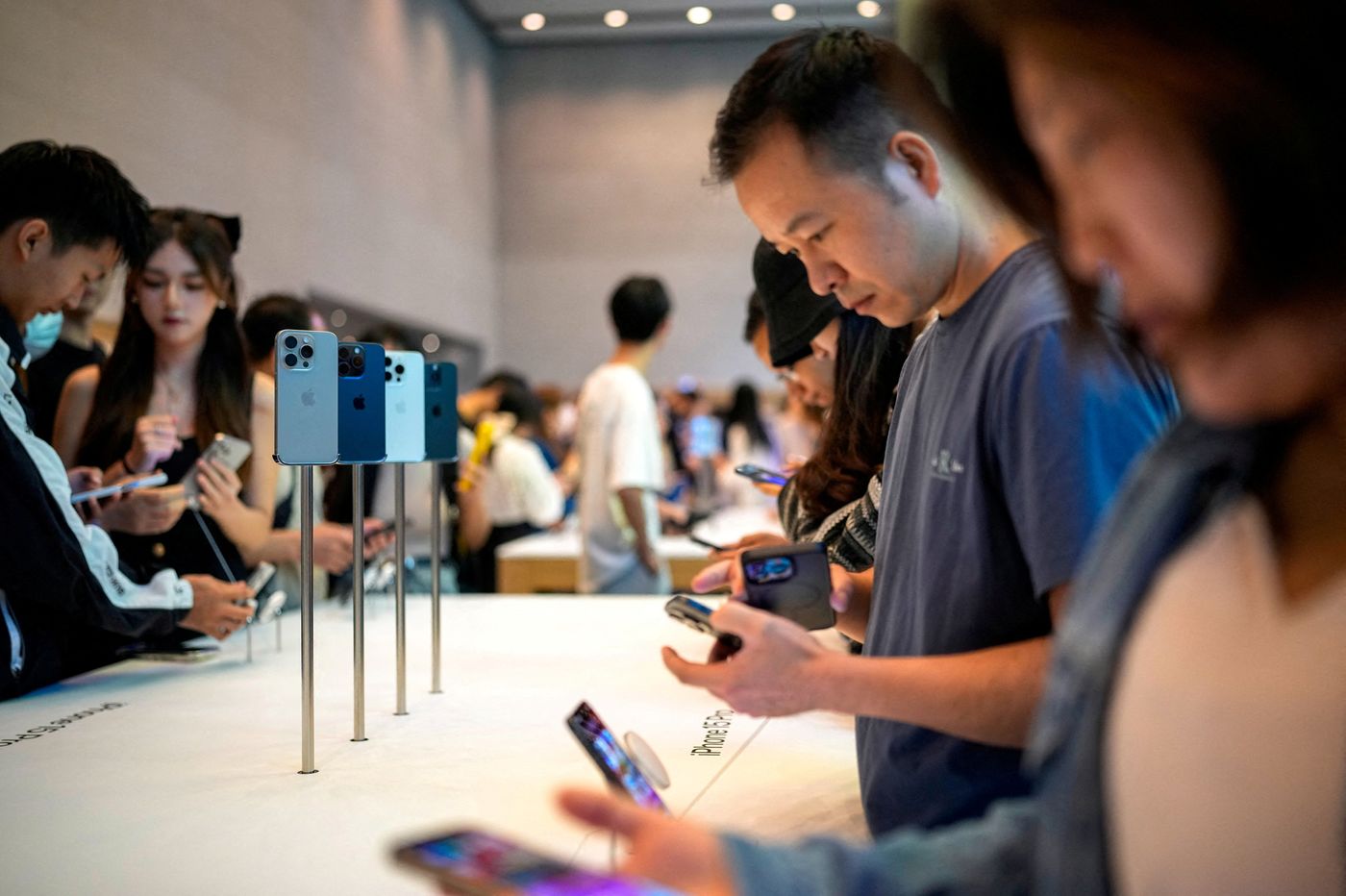
Apple’s recent decline in sales in China has raised questions about its standing in one of the world’s largest smartphone markets. Despite offering rare discounts on iPhones, Apple experienced a 4.3% drop in global sales in the January-March quarter, with a significant portion of the decline attributed to China, where sales plummeted by 8%.
A key factor contributing to Apple’s struggles in China is the perception among consumers that its flagship product, the iPhone, no longer represents the pinnacle of technological innovation. Unlike rival brands such as Huawei, iPhones lack built-in artificial intelligence functions, leading some consumers to seek alternatives that offer more advanced features.
Counterpoint Research reported a nearly 20% decline in iPhone unit sales in China, causing Apple to lose its top spot among smartphone brands in the country. Local rivals like Vivo and Honor have surpassed Apple, offering smartphones with innovative features and competitive pricing that resonate with Chinese consumers.
Tracy Xu, a Shanghai-based human-resources manager, cited Huawei’s superior camera, battery life, and phone reception as reasons for favoring the brand over the iPhone. Xu’s experience highlights the importance of technological advancements and performance in influencing consumer preferences in the highly competitive Chinese market.
While Apple remains confident in its China business, CEO Tim Cook acknowledged the challenges but expressed optimism for the long term. Despite some iPhones being among the top-selling smartphones in urban China, Apple faces stiff competition from local brands that offer a broader lineup of smartphones catering to diverse consumer needs.
Yu Deng, an iPhone user from Hunan province, emphasized the need for Apple to innovate and excite consumers with new features. Deng’s decision to forego purchasing a new iPhone in favor of upgrading existing devices underscores the importance of value for money in a market where consumers are increasingly discerning.
In response to waning sales, Apple broke from its tradition of avoiding discounts by offering limited-time promotions in China. However, local competitors like Huawei have capitalized on their technological advancements and competitive pricing to gain market share, particularly in the wake of U.S. sanctions that restricted access to advanced chips.
Huawei’s recent introduction of the Pura 70 series, featuring even more powerful chips and advanced features, further demonstrates the company’s commitment to innovation and its ability to stage a comeback despite facing significant challenges.
As Apple grapples with shifting consumer preferences and intensifying competition in China, it must prioritize innovation and value proposition to regain momentum in the market. The rise of local competitors like Huawei underscores the importance of understanding and adapting to the unique dynamics of the Chinese smartphone landscape.
In conclusion, Apple’s challenges in China highlight the evolving nature of global branding and the need for brands to continuously innovate and meet the changing demands of consumers. By embracing technological advancements and enhancing its value proposition, Apple can strengthen its position in the highly competitive Chinese market and reaffirm its status as a global leader in the smartphone industry.
Sources:
https://www.nytimes.com/2024/03/25/business/china-apple-iphones.html
One reply on “Apple’s Challenge in China’s Smartphone Market”
Hello Farah,
Great research you did. I think apple will still struggle in china because of how their economy for normal citizen is. and conflict between USA and China