By: Marc Callahan
Global Marketing Channels for International Audiences
Global marketing channels are the ways a product reaches customers in another market. For a Broadway or West End musical, that journey can take several dramatically global forms.
A show may begin in one theater. However, if it succeeds, the next question is how it reaches audiences somewhere else.
The first step is often a national tour. Moreover, the production travels from city to city with much of the same scenery, costumes, and staging.
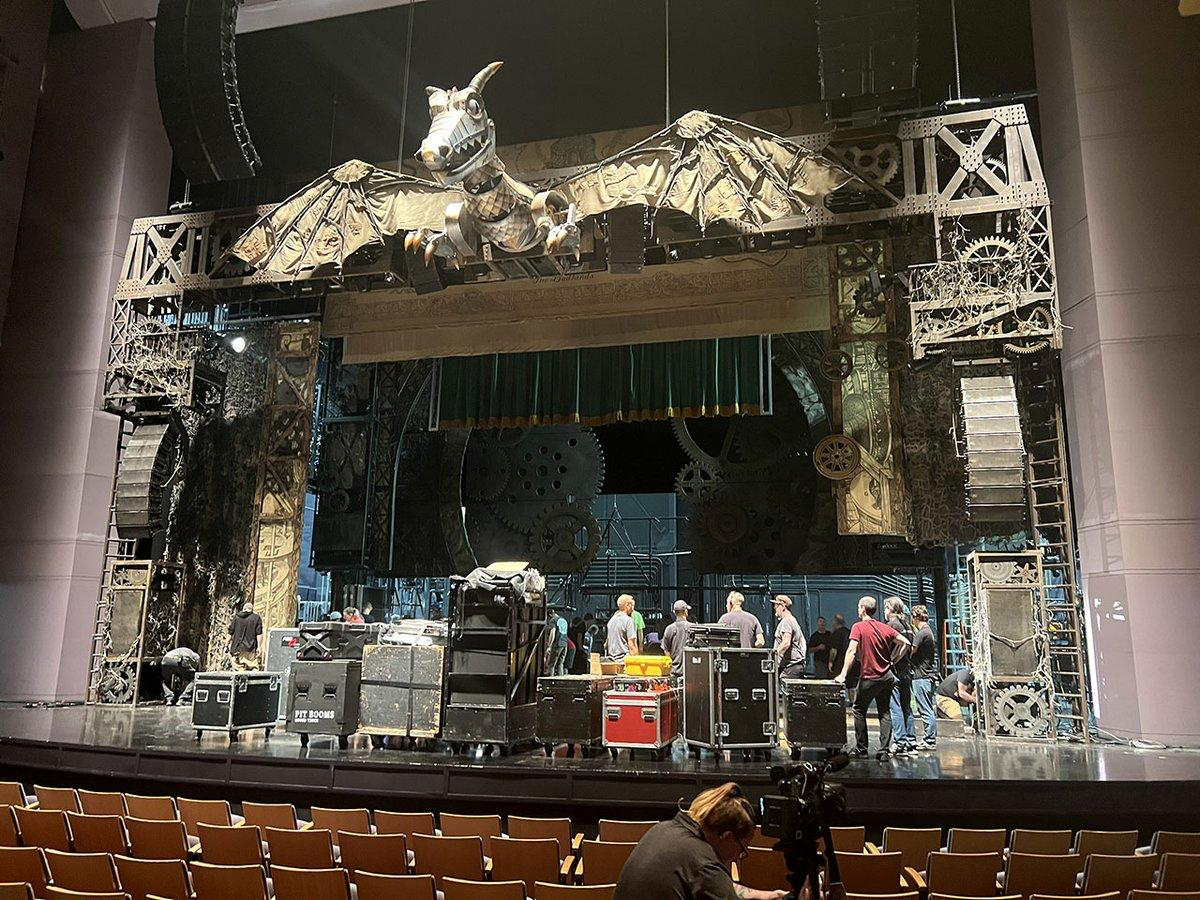
The production leaves its original theater and travels city to city with much of the same scenery, costumes, staging, and technical infrastructure. The audience changes, but the show remains highly standardized.
Wicked load-in at Overture Center, Madison. Sometimes the production itself travels. The load-in for the national tour of Wicked at Overture Center in Madison.
Credit: Photo by Shari Gasper / Isthmus
The next step can be an international tour, where the same production crosses national borders. The show is still essentially visiting the market rather than settling there. The artistic product may remain largely unchanged, but the business environment does not. Ticket prices, presenters, local labor, marketing, venues, and audience expectations can all differ.
Some shows then find a more permanent home in another country.
A resident international production is different from a tour because the show is no longer simply visiting the market. It establishes an ongoing local production with its own cast, theatre, marketing operation, and audience. Sometimes that resident production is also a replica production, meaning that much of the original Broadway or West End staging, choreography, scenic design, costumes, and branding are reproduced as closely as possible.
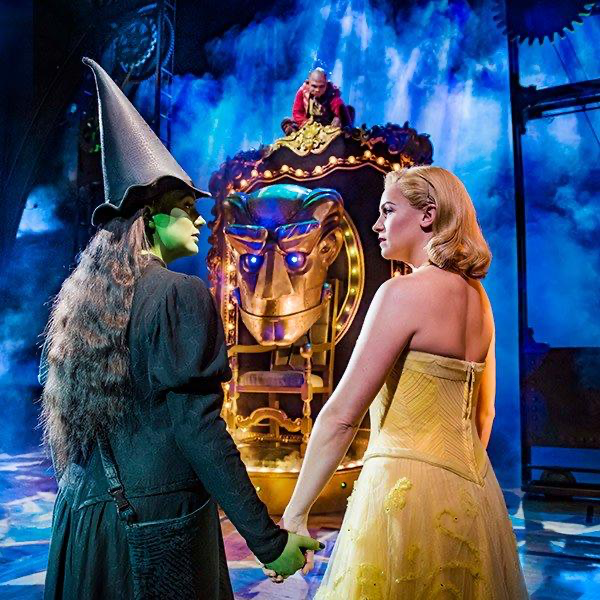
Wicked in London is a good example. Rather than visiting the market for a few weeks, the musical became a long-running West End production at the Apollo Victoria Theatre. It preserves much of the creative identity of the Broadway production while operating with a different cast, venue, audience, and local commercial infrastructure.
Wicked at the Apollo Victoria Theatre, London. Sometimes the show travels and stays. Wicked in London preserves much of the original staging, design, and branding while operating with a local company and venue.
Credit: Photo by Matt Crockett / Official London Theater
This is where the line between standardization and adaptation becomes especially interesting. The direction, choreography, scenic design, costumes, logo, and overall brand may remain highly standardized. But other elements—cast, ticket pricing, promotional strategy, local partnerships, and sometimes language—may adapt to the market.
Finally, there is licensing.
In this model, what primarily travels is not the scenery or original production but the intellectual property: the script, score, performance rights, and permission to produce the work. Licensing companies such as Music Theatre International and Concord Theatricals allow local producers to mount productions while royalties flow back to authors and rights holders.
This shifts much more of the financial and operational responsibility to the local producer. The local company casts the show, rehearses it, markets it, sells the tickets, and produces it for its own audience.
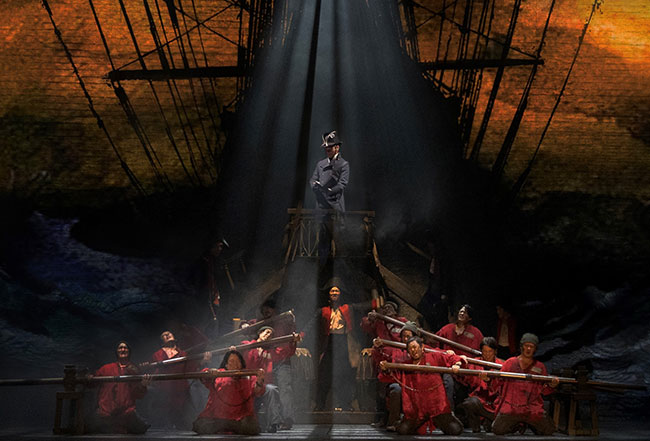
A Japanese production of Les Misérables, for example, can use a Japanese cast, Japanese producing infrastructure, and a local theatre while still presenting the same underlying musical to a new market.
Les Misérables in Japan. Sometimes what travels is the right to recreate the work. A local producer brings the musical to a new audience using local performers and local production resources.
Credit: Toho / Les Misérables Japan
Each of these channels creates a different balance of control, cost, risk, reach, standardization, and adaptation.
A tour gives the original producer more control but is expensive. A resident international production requires a deeper commitment to the market and may reproduce much of the original production using local performers and infrastructure. Licensing can dramatically expand reach while shifting more responsibility to local producers.
What I find most interesting is that a musical does not simply “go international.” It can move through several different channels, each with a different level of commitment to the new market.
A show can visit.
It can move in.
It can be rebuilt.
It can be licensed.
And at each step, the producer has to decide what must remain standardized and what can adapt.
That is what makes musical theatre such a useful example of global marketing channels: the channel determines not only how the show reaches the audience, but how much of the original product travels with it.
Bibliography
Concord Theatricals. “Intro to Licensing.” Concord Theatricals. Accessed October 19, 2026.
Isthmus. “Bringing Broadway to State Street.” Photograph by Shari Gasper. Accessed October 19, 2026.
Music Theatre International. “About Licensing.” Music Theatre International. Accessed October 19, 2026.
Music Theatre International. “About Us.” Music Theatre International. Accessed October 19, 2026.
Music Theatre International. “International Licensing / Contact Us.” Music Theatre International. Accessed October 19, 2026.
Official London Theatre. “Wicked.” Production photography by Matt Crockett. Accessed October 19, 2026.
Toho Stage. Les Misérables Japan. Accessed October 19, 2026.