So, What Is a Global Marketing Channel?
When approaching global marketing channels for class, I had to translate the concept into something that made sense in my own field. I work in opera and live theatre, where the “product” is usually tied to a particular place, cast, orchestra, stage, and audience. You cannot exactly put La Bohème in a box and ship it overseas.
That is what made the idea of channels interesting to me.
At its simplest, a global marketing channel is the route through which a company reaches customers in another market. Sometimes that route is direct. Sometimes there is an intermediary between the producer and the customer.
Opera turns out to be a surprisingly good way to see the difference.
The Shortest Route: Get Them in the Building
The traditional opera model is about as direct as it gets.
The Metropolitan Opera produces a performance in New York. I buy a ticket from the Met, go to Lincoln Center, sit down, and experience the product where it was created.
That gives the Met a tremendous amount of control. It controls the production, the venue, the ticketing experience, the branding, and the relationship with the customer.
But there is an obvious limitation: I have to get to New York.
For most of opera’s history, reaching a new geographic audience meant getting that audience to the opera house—or physically moving an opera company somewhere else.
Digital channels have fundamentally changed that equation.
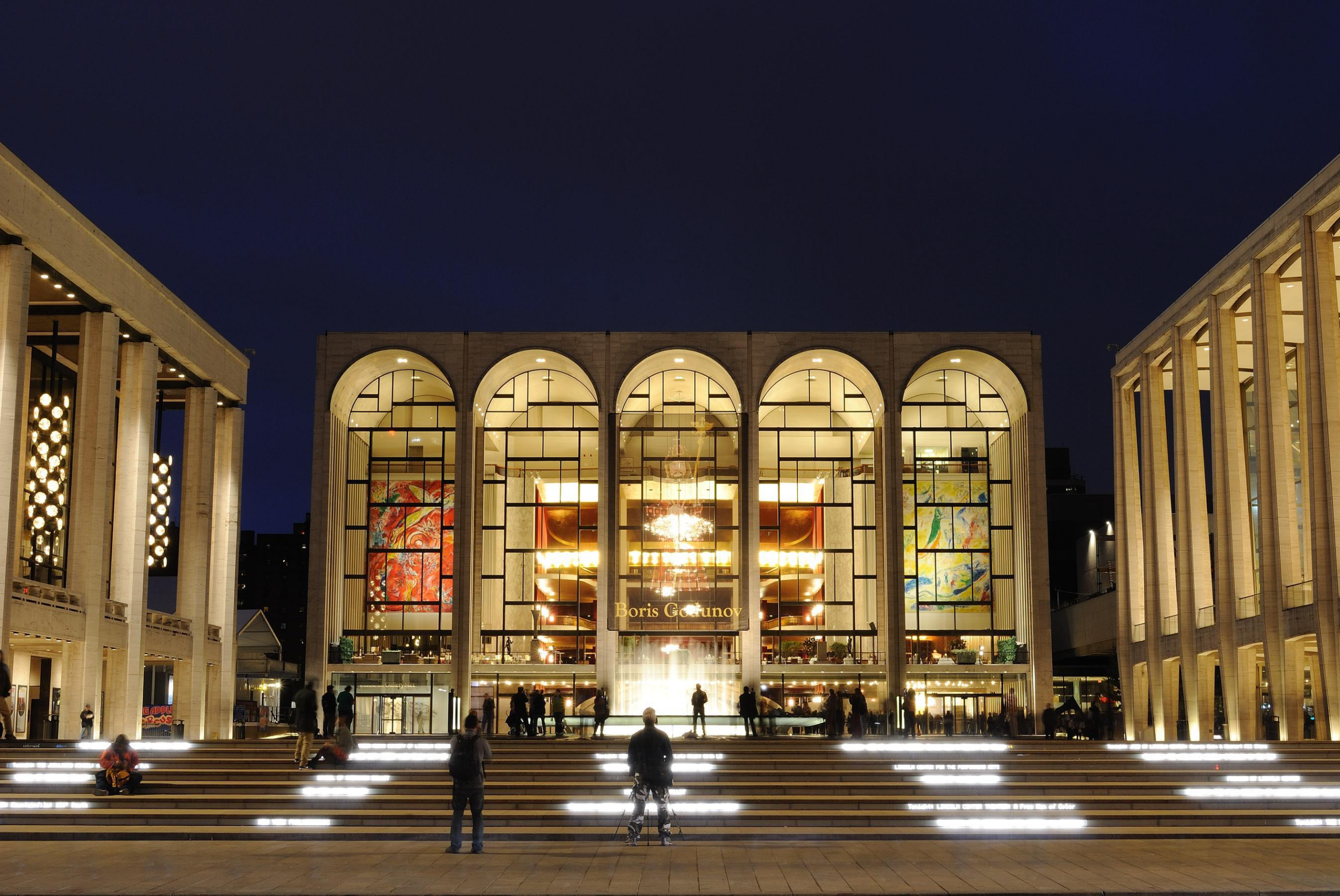
The traditional opera channel is simple: the audience travels to the opera house.
Enter the Middleman: Who Owns the Audience?
An opera company does not necessarily have to sell directly to me.
TodayTix is a good example. It sits between arts organizations and consumers, helping people discover and purchase tickets for theatre, opera, dance, and other live events. TodayTix Group says it works with more than 20,000 partners and has sold more than 70 million tickets.
That is useful for the arts organization. A platform can introduce a performance to someone who might never visit the opera company’s own website.
But it also raises a question that I think is important well beyond opera:
Who owns the relationship with the customer?
If I discover the Met through TodayTix and make the purchase there, the intermediary has created value. But the Met has also given up some control over how I discovered the product and how that transaction happened.
This is where the direct-versus-intermediary distinction we discussed in class becomes much less abstract.
The Opera House Goes to the Movies
The Metropolitan Opera found another way around geography with The Met: Live in HD.
Instead of moving the entire opera company to another country, the Met keeps the performance at Lincoln Center and sends the performance itself to cinemas around the world.
That is a very different channel:
Metropolitan Opera → cinema/distribution network → local cinema → audience
And it is genuinely global.
Since Live in HD began in 2006, the Met says the series has sold more than 33 million tickets and reached more than 2,200 screens in more than 70 countries across six continents.
Think about what that means. A person in another country can consume a Metropolitan Opera performance without ever traveling to New York.
The Met has expanded its market internationally without building another Metropolitan Opera House.
But it has also added an intermediary. The local cinema now controls part of the final customer experience and sells the ticket to the consumer.
That is the trade-off: greater reach, but less direct control over the final transaction.
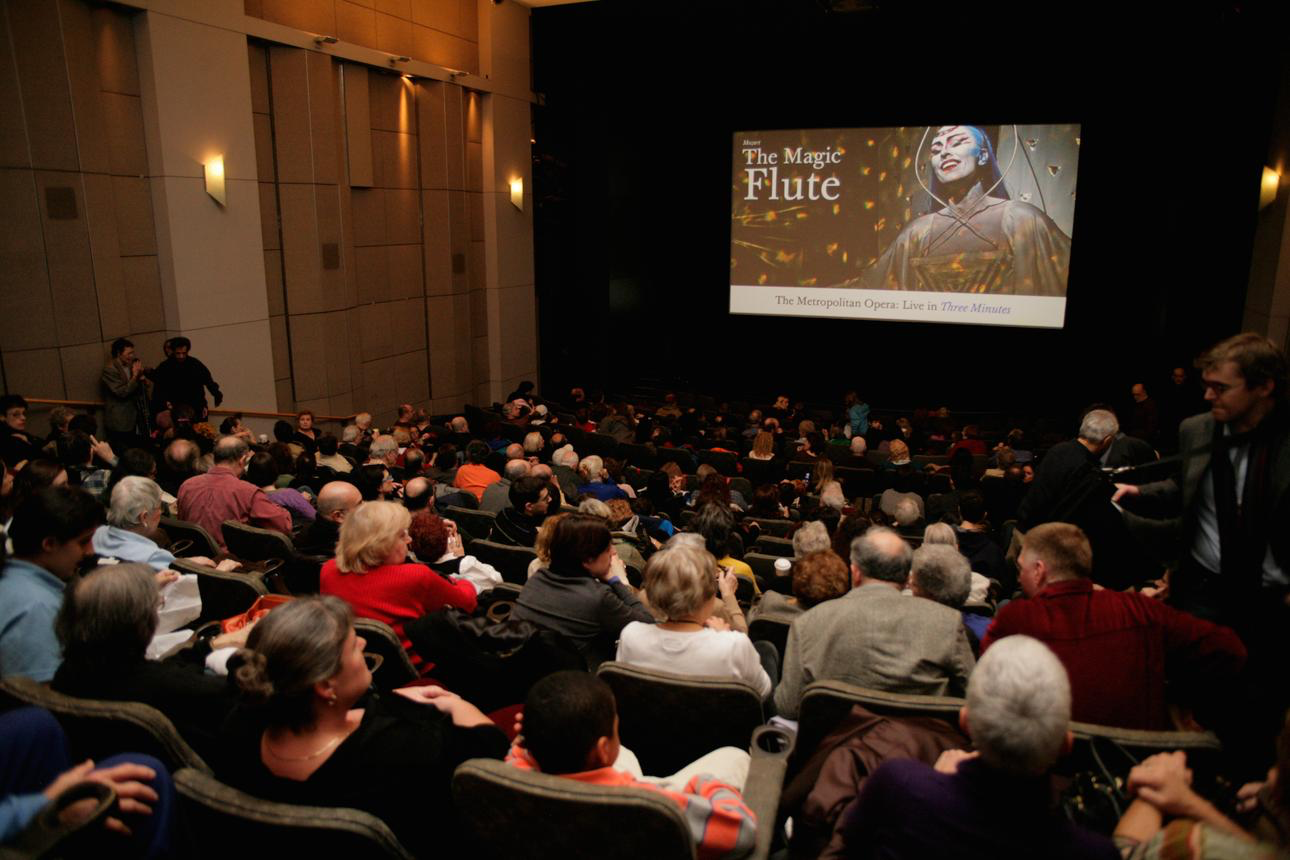
The performance remains at the Met, but the channel carries it into cinemas around the world.
Skip the Cinema: Stream It Directly
Then the channel gets shorter again.
Met Opera on Demand is the Met’s own streaming service. It offers more than 900 Met performances and is available worldwide, although a small number of individual titles are restricted in certain countries because of copyright and other rights-clearance issues.
Now the structure looks more like:
Metropolitan Opera → Met Opera on Demand → consumer
The cinema intermediary has disappeared.
The Met controls the content, the subscription platform, the brand, and much more of the customer relationship.
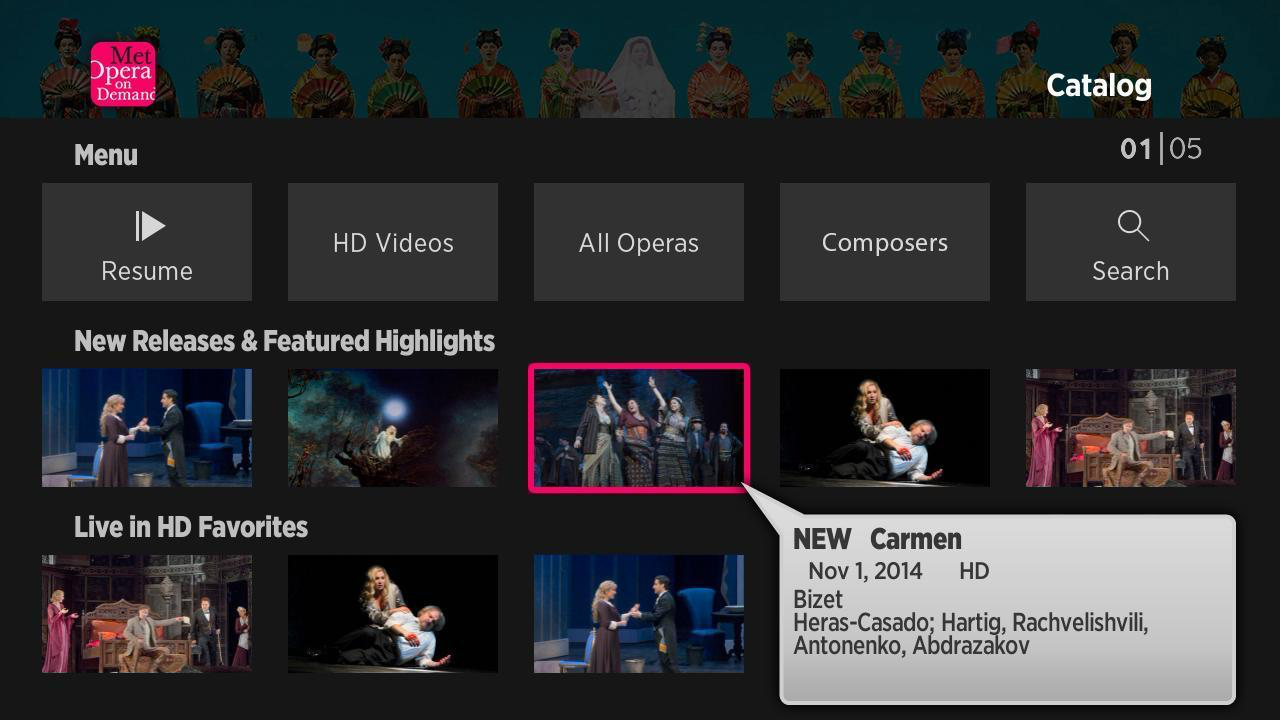
Met Opera on Demand shortens the channel again: the producer distributes its own performances directly to viewers worldwide.
But even within streaming there are different channel structures.
Marquee TV, for example, describes itself as a global streaming platform for the performing arts. It offers hundreds of productions across opera, theatre, ballet, dance, classical music, and other performing arts.
That is not the same model as Met Opera on Demand.
Met Opera on Demand primarily distributes the Met’s own product.
Marquee TV aggregates products from multiple arts organizations and distributes them through one platform.
So even though both involve watching performing arts on a screen, one is much closer to a direct channel, while the other functions as an intermediary.
The technology may look similar. The channel structure is not.
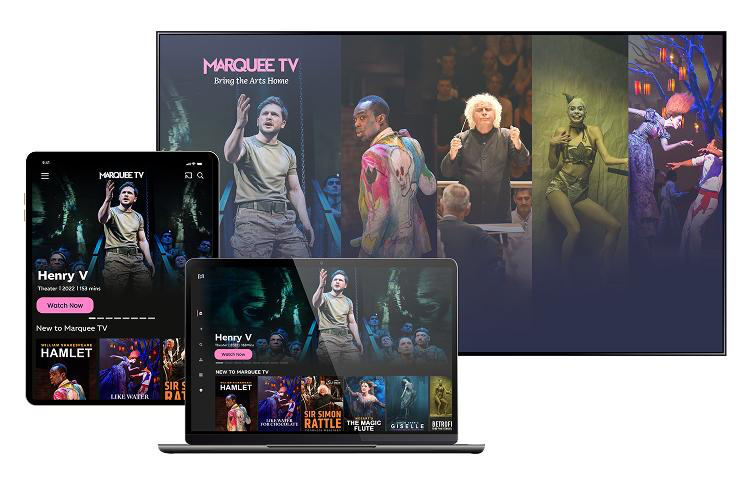
Marquee TV uses a different model: one intermediary aggregates performing-arts content from many producers and distributes it through a single platform.
How Global Is Global?
This is where I think the subject becomes particularly interesting.
The digital channel does not simply make opera more convenient for somebody living in New York. It allows an arts organization to reach markets where it has no physical presence at all.
Met Opera on Demand is available worldwide through its website and on a variety of devices. The Met has also made institutional access available through more than 200 colleges and universities around the world.
Live in HD reaches audiences on six continents.
Marquee TV provides a global platform for performances created by numerous arts organizations.
The customer no longer has to travel to where the product was created.
In many cases, the product travels to the customer instead.
But Is It Still the Same Product?
This is the question I keep coming back to.
If I sit in the Metropolitan Opera House, I decide where to look.
If I see the same performance in a cinema, a camera director makes that decision for me. I may see a close-up of a singer that would be impossible from the balcony. I hear mediated sound. I may watch backstage interviews during the intermission.
If I stream the production at home, I can pause it. I can stop halfway through and come back tomorrow. I can watch it on a television, laptop, tablet, or phone.
So has the channel simply delivered the same product more efficiently?
Or has changing the channel actually changed the experience—and therefore changed the product?
For me, that is where global marketing channels become much more interesting than simply figuring out how to get something from Point A to Point B.
From One Stage to a Global Audience
Opera was once almost completely dependent on getting an audience into one particular building at one particular time.
That is no longer true.
An opera company can sell directly to an audience. It can work through a ticketing intermediary. It can transmit a live performance into cinemas around the world. It can build its own streaming service. Or it can place content on an aggregator that introduces it to audiences alongside performances from many other organizations.
Each choice creates a different balance of reach, control, cost, customer information, and market access.
That is what finally made global marketing channels click for me.
In opera, the question is not simply, “How do we sell a ticket?”
It is:
Who connects us to the audience? Who controls that relationship? What crosses the border? And what happens to the product when the channel changes?
For an art form that once required everyone to be in the same room, that is a pretty dramatic change.
Bibliography
Marquee TV. “What Is Marquee TV?” Marquee TV Help Centre. Updated September 28, 2026.
Metropolitan Opera. “Met Opera on Demand: FAQ.” The Metropolitan Opera. Accessed November 1, 2026.
Metropolitan Opera. “The Metropolitan Opera’s 2026–27 The Met: Live in HD Season.” The Metropolitan Opera, 2026.
Metropolitan Opera. “2025–26 Education, Media, and Young-Artist Programs.” The Metropolitan Opera.
Myhr, Niklas. Global Marketing Channels. BUS 633 International Marketing, Chapman University.
Rosenbloom, Bert. “Six Classic Distribution Paradigms for Global Marketing Channel Strategy.” Symphonya: Emerging Issues in Management, no. 1 (2010).
TodayTix Group. “TodayTix Group.” Accessed November 1, 2026.