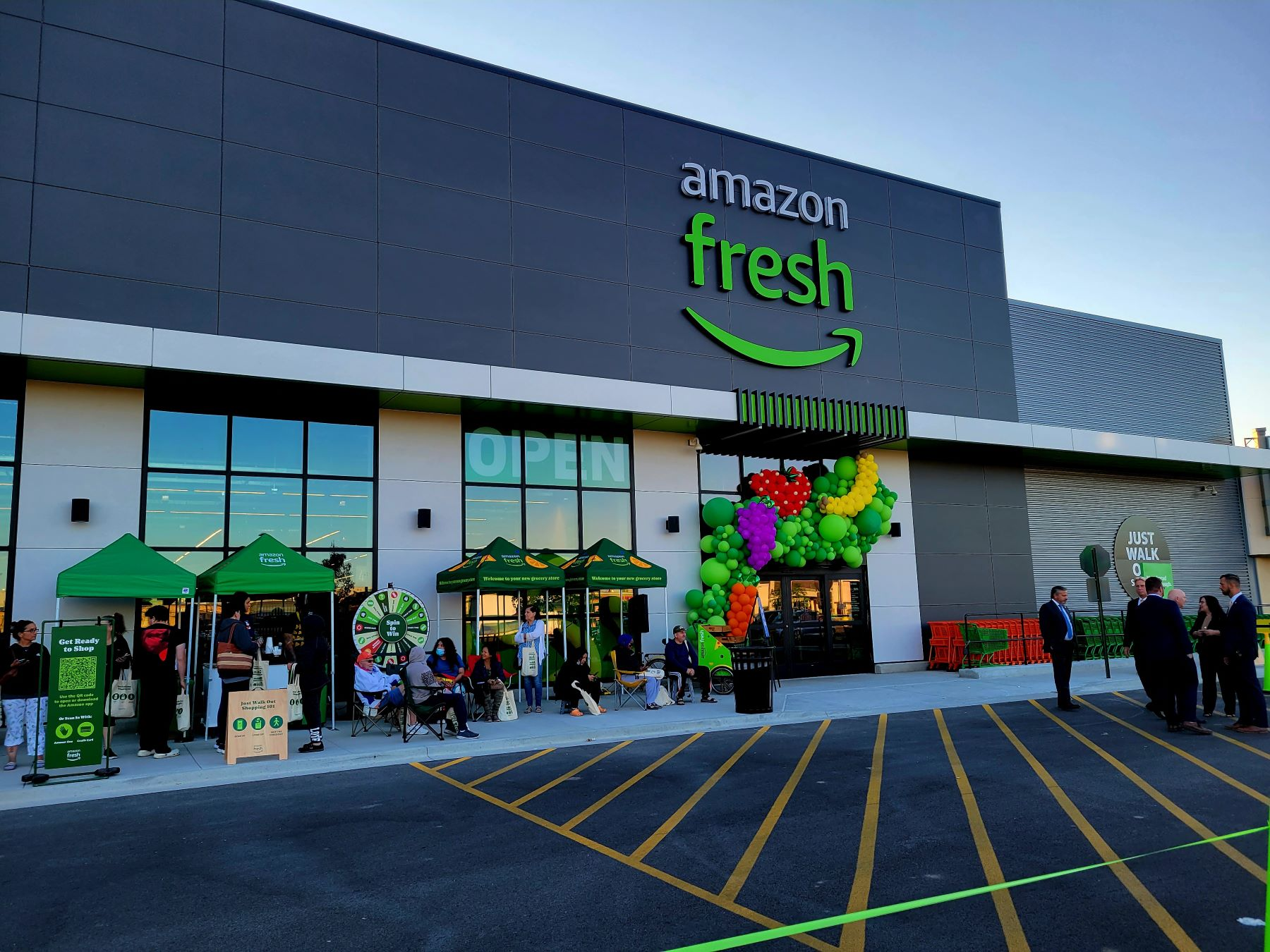
Before Amazon Fresh moved into my neighborhood, the building had been home to a beloved Toys “R” Us. There is some irony in Amazon occupying the former home of a retailer that online shopping helped push toward bankruptcy, only for Amazon Fresh to suffer a similar fate, at least in physical retail. After the toy store closed, the enormous space sat vacant until Amazon gave it a second life.
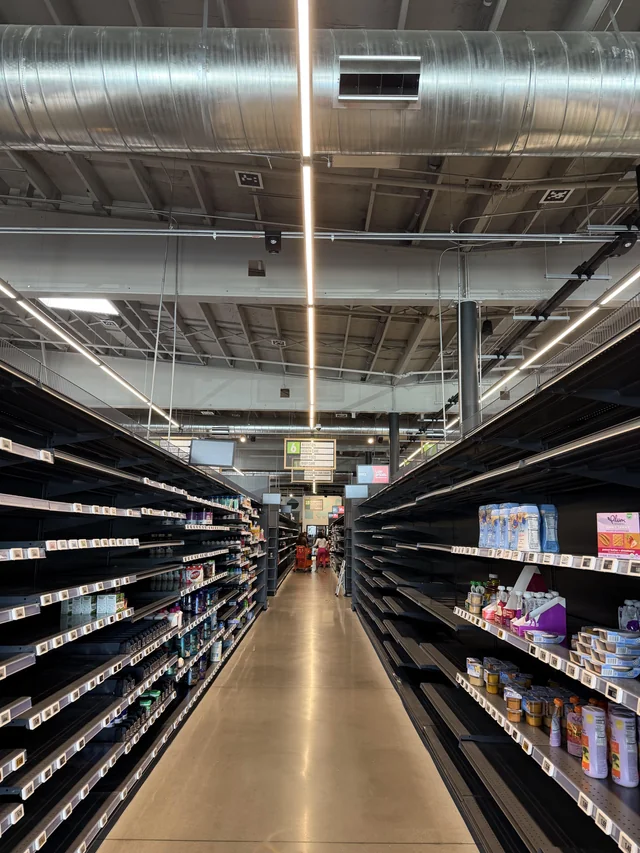
You might expect a new grocery store carrying the Amazon name to attract immediate attention. I did not rush to visit, however, because it was not part of my routine. When I finally walked inside, my first impression was simple: the place felt empty.
There were customers, but not many. The aisles seemed thrown together, and nothing about the merchandise felt particularly special. A pallet of Coca-Cola had been dropped into the middle of a major walkway, leaving barely enough room for one shopping cart to pass. I thought, “Who’s managing this place?” Some of the prepared food looked as though it had been sitting in its containers too long, yuck. I found an oddly brown bottle of sriracha instead of the familiar bright-red sauce, while some of the products I actually wanted were nowhere to be found.
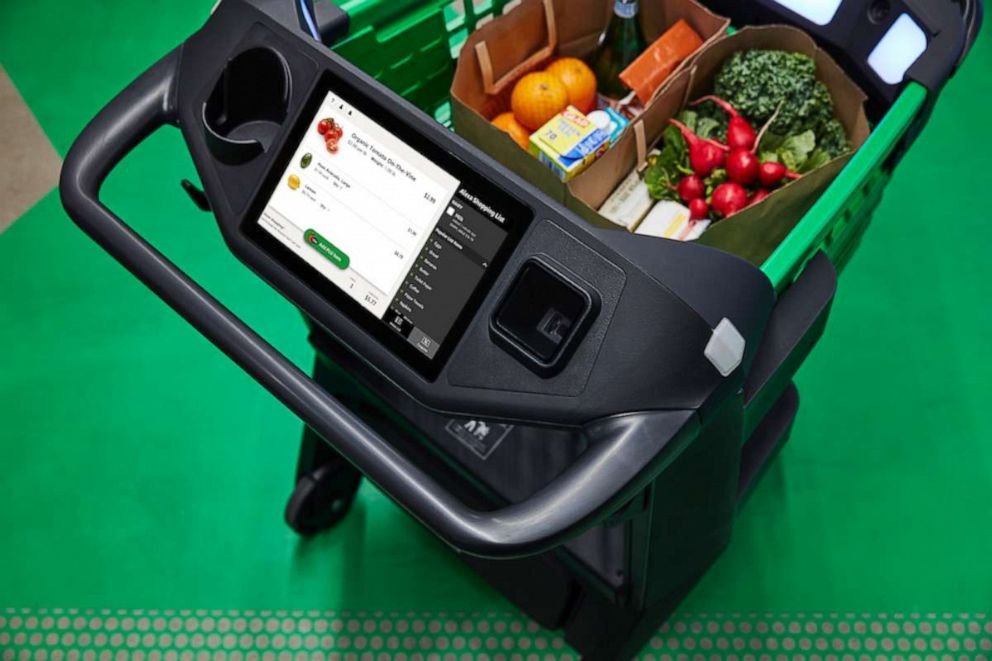
Even Amazon’s technology created friction. Its smart, heavy, shopping carts required a learning curve, and at checkout I discovered that I could not simply use Apple Pay; payment had to run through my Amazon account. The cart could be taken outside, but it would lock if it traveled too far from the store. That restriction made sense, these were expensive machines, but it was another rule customers had to learn.
The Amazon Returns area was placed at the back, forcing customers to walk past the merchandise before receiving a coupon intended to encourage an in-store purchase. That strategy was obvious and made sense, but the store itself did not give me much reason to use the coupon.
The experience was not bad. In fact, I liked the idea of checking out without waiting in line because I sometimes experience “line anxiety”; the nagging suspicion that I chose the slowest checkout line. But Amazon Fresh was merely okay, and “okay” is a dangerous position in the grocery business.
I assumed Amazon had enough money to weather the storm and improve the concept. The decision to close its physical Amazon Fresh stores surprised me because Amazon usually seems to do only one thing: expand. After thinking about my visit, however, the retreat makes perfect sense.
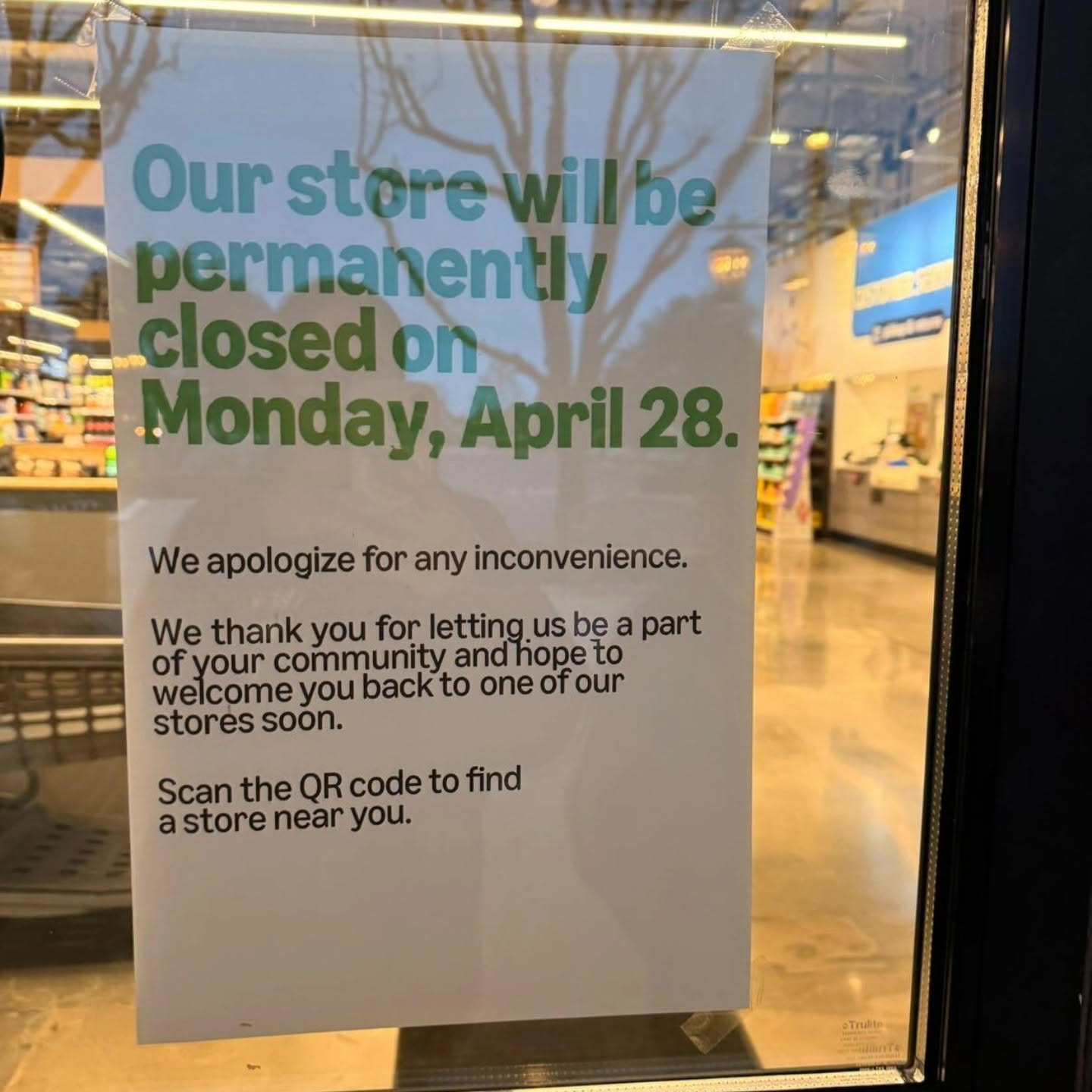
My reaction was apparently not unique. In January 2026, Amazon announced that it would close its Amazon Fresh and Amazon Go physical stores, although Amazon Fresh would continue as a delivery service. Some locations would be converted into Whole Foods Market stores, while Amazon planned to expand grocery delivery and open more than 100 new Whole Foods locations.
Grocery delivery is certainly convenient. Still, I hesitate to let someone else select my produce. Will the employee choose the freshest items available, or the bruised avocado and nearly expired salad that other shoppers left behind?
Amazon’s explanation for the closures was unusually revealing. The company acknowledged that its Amazon-branded grocery stores had not created a sufficiently distinctive customer experience or found the right economic model for large-scale expansion. In plain English, Amazon Fresh did not give shoppers enough reasons to change their habits.
Consumers love short checkout lines, but an empty store sends a different message. A nightclub with no line is probably not the hottest club in town. Perhaps Amazon’s promise of a frictionless experience unintentionally made its stores feel unpopular.
Amazon Fresh began with a compelling idea: take everything Amazon had learned about online shopping and use it to reinvent the neighborhood grocery store. Amazon already knew what millions of customers purchased, had sophisticated distribution networks, and had trained people to value speed and convenience. If those advantages could be transferred into a physical supermarket, Amazon might succeed where traditional grocery chains could not.
Technology was supposed to provide the difference. Amazon introduced smart Dash Carts that identified items as customers placed them inside, displayed a running total, and allowed shoppers to bypass a conventional checkout line. Customers could connect their carts to their Amazon accounts, use digital shopping lists, and receive personalized discounts. Amazon was not merely opening another supermarket; it was attempting to turn grocery shopping into a physical version of shopping on Amazon.com.
That idea looked impressive, but grocery shopping is not the same as ordering a phone charger online. Customers want to inspect produce, recognize familiar brands, find competitive prices, and move through a clean and logically organized store. They also expect the payment process to be effortless. When the technology requires instructions, excludes familiar payment methods, or makes customers wonder whether they are using the cart correctly, convenience begins to feel like work. The innovation becomes another obstacle rather than a reason to return.
The problem was not confined to the United States. Amazon also closed all 19 of its UK Fresh stores after fewer than five years, suggesting that its technology-centered grocery concept struggled to establish a compelling identity in more than one national market.
Amazon Fresh did not fail because its technology was unimpressive. It failed because the technology did not produce a grocery store that customers loved.
The company can afford to close the experiment and redirect its money toward Whole Foods and grocery delivery. Most companies cannot afford such an expensive lesson. The larger international-marketing lesson is simple: a powerful global brand and sophisticated technology cannot replace local consumer habits, sound store management, and a distinctive customer experience.
Sometimes the smartest cart in the world is still sitting inside an ordinary grocery store, or stranded uselessly at the edge of its parking lot.
Amazon: Closing Amazon Fresh and Amazon Go Stores
Amazon: Introducing the First Amazon Fresh Store and Dash Cart
Associated Press: Amazon to Shut Down Amazon Go and Amazon Fresh Stores
Reuters: Amazon to Close Its UK Amazon Fresh Stores
AI disclosure: I used ChatGPT to help organize my personal observations, verify factual claims, and review the clarity and grammar of my draft. The experiences, opinions, and conclusions expressed in this post are my own, and I reviewed the cited sources.
2 replies on “How Did Amazon Fresh Become Rotten?”
Your line about the empty nightclub really stuck with me. Frictionless checkout only feels like a perk when the store is busy enough to make lines a problem. What I find telling is where Amazon is redirecting its money: Whole Foods, a brand that succeeds almost entirely on identity (curated products, a clear customer, a store people want to be seen in) rather than technology. That seems to confirm your point that the tech was never the value proposition. It was a solution looking for a store worth solving for. I’m curious whether you think the Dash Cart concept could work if it were layered onto a store people already love, like a Whole Foods, instead of being the main attraction. Or does grocery shopping resist that kind of automation no matter the setting?
I think the Dash Cart concept could work much better at Whole Foods because people already have a reason to shop there. The technology would be an added convenience rather than the reason for visiting the store. That was part of the problem I had with Amazon Fresh. I was not thinking, “This is where I want to buy groceries.” The technology alone was not enough to change that.
Give me a store I already like, with products I actually want, and then make checkout easier. That seems like a much stronger value proposition than building the entire experience around the technology.