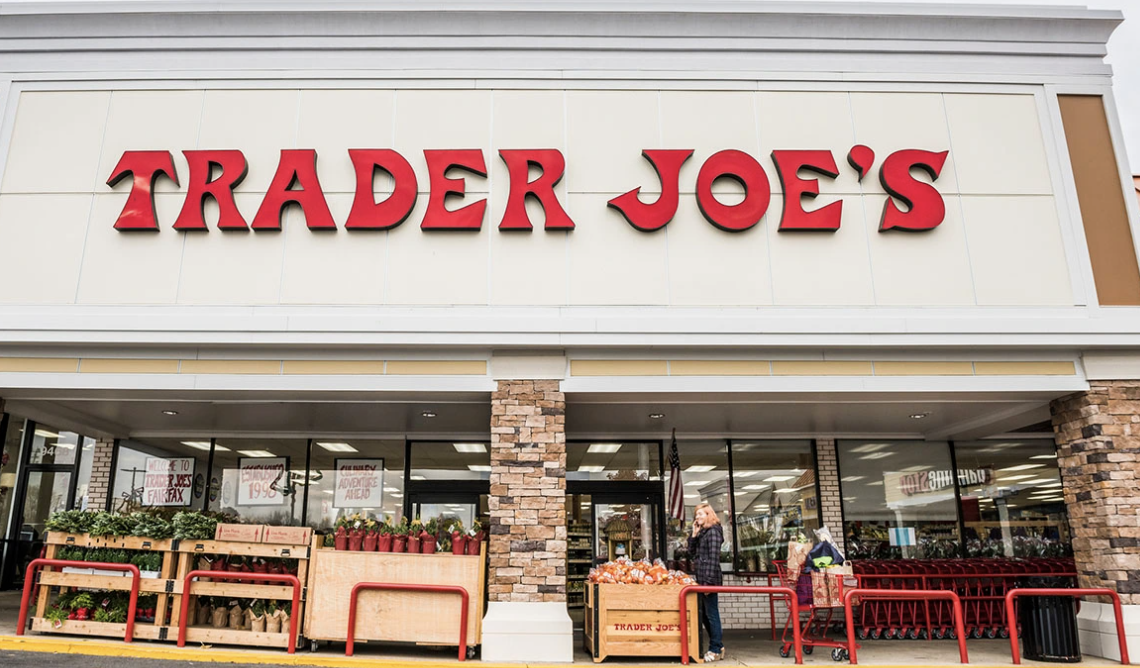
Perhaps one of the most exciting case studies in the grocery scene was the interaction between Trader Joe’s and Canada.
Trader Joes:
Trader Joe’s is a popular grocery chain located in the United States. Headquartered in Monrovia, California, Trader Joe’s has 560 stores nationwide. Trader Joe’s popularity has developed a fan following, with dedicated consumers returning weekly. The stores are known for their private label products, effectively allowing Trader Joe’s to “skip the middle man.” Trader Joe’s has infamously been known for its motto to serve “the hardworking and underpaid.” Though extremely popular, Trader Joe’s is only in 42 states and has not expanded internationally.
Ethnography:
Ethnography can be used in marketing intelligence to observe and study people and how they live their everyday lives. Ethnography can be time-consuming but can reveal specific tastes and preferences as well as the wants and needs of consumers in different locations and periods.
Pirate Joes:
Trader Joe’s has never expanded internationally. However, Michael Hallatt created his own grocery business, Pirate Joes, in 2012. Pirate Joes opened in Vancouver, British Columbia, Canada, in 2012. Hallatt opened Pirate Joe’s, hoping to sell Trader Joe’s products in Canada. Hallatt would drive over the border into the United States and buy large amounts of Trader Joe’s products. He would then return to Canada and sell these products at Trader Joe’s. Pirate Joe’s became an instant hit. Canadians who once could never or rarely get Trader Joe’s products now had a location to purchase these products in Canada. The success even alerted Trader Joe’s to Pirate Joes. Trader Joe’s attempted to take legal action in 2013 but was dismissed as Hallatt could not be convicted under the United States trademark law as he was in Canada. The case was appealed in 2017, and Hallatt decided to close Pirate Joe’s due to the amount of legal fees he would face.
Trader Joe’s and Ethnography in Canada:
Though Pirate Joe’s only lasted for five years, its case makes an impressive case for international expansion for Trader Joe’s. It was clear that Trader Joe’s was displeased by Pirate Joe’s. However, Pirate Joe’s may have been a secret success for Trader Joe’s as they were able to use ethnography for free in Canada thanks to Pirate Joe’s. Trader Joe’s could observe how consumers reacted to their products, monitoring sales and the frequency of consumer shopping habits in Canada through Pirate Joe’s. Had Pirate Joe’s not existed, Trader Joe’s would have never been able to perform this form of ethnography for international expansion in Canada. Pirate Joe’s ultimately provided invaluable ethnographic information for Trader Joe’s to understand the Canadian consumer better. As Hallatt concluded, the fall of Pirate Joe’s was not a failure. “‘It was a great run,” he said, and one that established that a market exists for Trader Joe’s north of the border. “So I think if they were ever to open in another country, Canada might be first on the list. We’ll see’” Ashifa Kassam, 2017).
Sources: