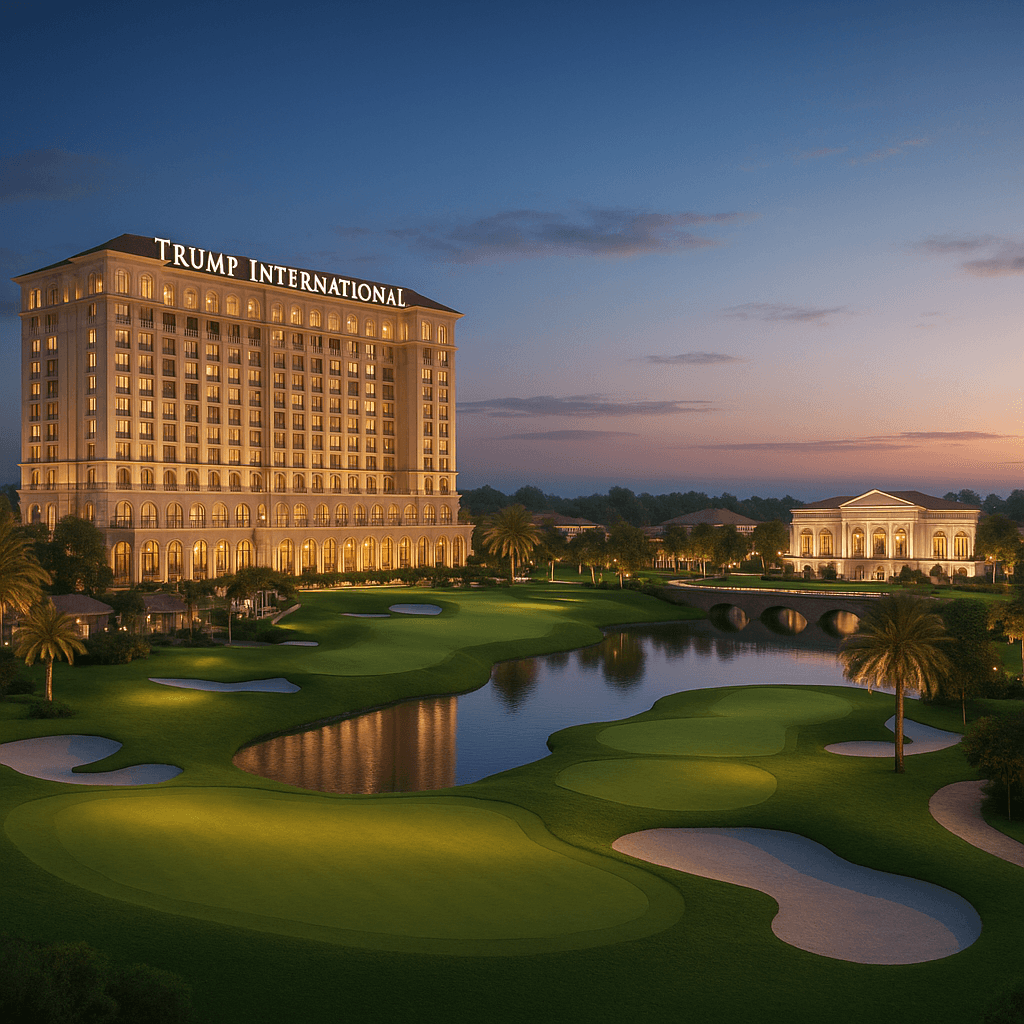
Vietnam’s Real Estate Growth and the Arrival of a Global Brand
Real estate, an interesting subject that has been continuously mentioned by developing countries as both a drive for their economic expansion and a potential constraint of value creation. While rising prices of real estate can boost the economy’s rate of expansion, critics argue that inflating properties may only cause the assets’ price rather than the actual value of the economy.
Despite all the controversy around the real estate industry, it is undeniable that real estate will always be the leading industry of a rising economy. The presence of international brands in a developing country is another confirmation of its potential. In this case, the investment of the Trump Organization into Hung Yen, a province of Vietnam, definitely signals that Vietnam in general is on its way to become a leader especially in the SEA region.
An Asset-Light Strategy for International Expansion
By investing into Vietnam, the Trump Organization does not only state their ambition in global marketing, but it also reveals somewhat of their current expansion strategy. Not like other projects which the main investor has to finance and be the main contributor to its own project, but the Trump Organization acts as a manager in this case. By accepting the branding fee of almost $5 millions dollars and managing the whole project, Trump Organization does not have to spend a huge amount of capital on a $1.5 billion dollars project, but still get its benefit of marketing a local brand to the international market, especially when it is almost 9,000 miles away from each other. It is not entirely true that they do not bear any downside, which is their brand reputation if business was not managed right. However, they minimize that downside by acting as the main manager to the project so that every aspects of the business
Selling Status, Not Just Real Estate

Furthermore, this investment signifies the use of global-status effect to the local population. By investing in a property of the project, the investor does not only own that piece of real estate, but automatically they have become a member of the Trump International ecosystem. This is Global Consumer Culture positioning where the consumer is encouraged to associate the product with a global lifestyle rather than merely a real estate acquisition. Significantly, to the Vietnamese’s culture in specific and Asia as a whole, these new investments mean that they have “made it” in the society. Western culture might not look at those as a symbol of success, but luxury products can function as visible signals of achievement and social status in some Asian consumer segments. Those buying decisions will be influenced by family, friends and especially their circle.
Glocalization: Adapting Global Luxury to Vietnamese Consumers
This demonstrates the importance of glocalization in cross-cultural consumer behavior. Trump International can maintain its global positioning through luxury branding, international standards, golf, hospitality, and exclusivity, while adapting its marketing communication to what Vietnamese consumers consider valuable. In this way, the project is not simply selling real estate; it is selling a combination of financial value, social identity, prestige, and membership in a global lifestyle.
One Luxury Brand, Different Vietnamese Consumers
However, these cultural tendencies should not be applied to every Vietnamese or Asian consumer. Different generations, income groups, and consumer segments may interpret luxury differently. Younger consumers, for example, may place greater emphasis on lifestyle and international experience, while other buyers may be more interested in investment value, family wealth preservation, or business networking. Understanding these differences would allow Trump International to segment the Vietnamese market more effectively instead of treating all local consumers as one group.
Sources
The Trump Organization. (2025). “Hung Yen and The Trump Organization Break Ground on New Golf and Residential Project – Trump International, Vietnam.”
Useful for the factual background of the project, including its location, development concept, and positioning as the first Trump-branded golf and residential development in Vietnam. Trump Organization
Trump International Vietnam project announcement
Alden, D. L., Steenkamp, J.-B. E. M., & Batra, R. (1999). “Brand Positioning through Advertising in Asia, North America, and Europe: The Role of Global Consumer Culture.” Journal of Marketing, 63(1), 75–87.
This is the strongest source for your discussion of Global Consumer Culture Positioning (GCCP). The authors introduced GCCP as a way brands associate themselves with symbols of an emerging global consumer culture. Sage Journals
Journal of Marketing article
“Patterns of Vietnamese Buying Behaviors on Luxury Branded Products.” Asia Pacific Journal of Marketing and Logistics, 29(4), 778–795 (2017).
This is useful for your discussion of Vietnamese luxury consumers, social norms, perceived resources, and individual differences in luxury consumption. The study surveyed 207 Vietnamese consumers. ScienceDirect
Emerald article
AI Use Disclosure: Generative AI (ChatGPT) was used to assist with identifying relevant sources and locating or developing visual materials for this blog. The analysis, arguments, interpretation, and final written content were reviewed and developed by the author.