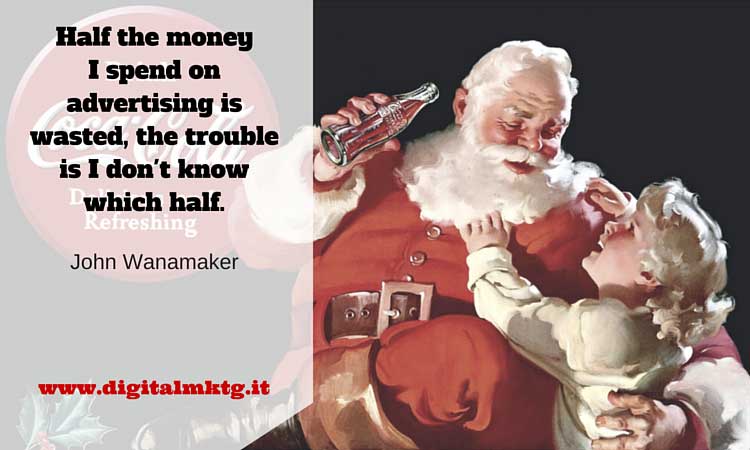
The era of comfortable vagueness in marketing is officially coming to an end. For decades, corporate marketing departments operated under immeasurable “brand awareness” and abstract buzzwords. A century-old statement by John Wanamaker, “Half the money I spend on marketing is wasted; the trouble is I don’t know which half”, supported this vagueness.
In today’s world, the combined impact of artificial intelligence (AI), macroeconomic pressures such as tariffs, and changing consumer behavior demands that marketers change their strategy. Additionally, the prevalence of fake digital content has emphasized the importance of trust and authenticity. The modern landscape is eliminating vague marketing, replacing it with performance-first budgets and agile capital reallocation.
According to research from Deloitte Digital, global organizations are actively realigning toward strict, CFO-endorsed ROI models, creating an environment that eliminates blind ad spending. Privacy regulations are also forcing brands to invest heavily in first-party data. Marketing must prove its direct impact on unit economics, Customer Acquisition Cost (CAC) control, and break-even thresholds. Brands are prioritizing transparency, authentic messaging, and precise problem-solving to counter consumer skepticism and build tangible algorithmic trust.
The Rise of Performance-First Budgets
Performance-first budgets are now the winning strategy; marketing budgets are no longer set in stone as fixed annual overhead costs as they used to be, but they have evolved into highly scrutinized revenue-generating funds. A global study by Adobe and MMA Global revealed that 57% of average marketing budgets now sit behind measurable performance channels. The CMO Survey (conducted by Deloitte and Duke University) demonstrated that performance marketing’s share of total ad spend grew significantly from 59.9% to 68.8%. Budgets are increasingly funneled into channels like AI-driven search engine optimization, value-based bidding, and targeted retail media networks where returns are mathematically defensible.
Agile Budget Reallocation as a Global Strategy
Operating with a performance-first mindset requires agility. The traditional model of setting a static annual or quarterly media plan is being replaced by dynamic, frequent capital optimization. A Kantar study highlights an operational difference between market leaders and average players. Leading marketers break down channel-specific budgets into granular ad-format levels upfront. Once deployed, these leading teams actively adjust capital allocations weekly, or even every 48 hours, based on real-time campaign dynamics. Average marketers, on the other hand, continue to evaluate metrics on rigid monthly or quarterly schedules, and they end up missing monetization windows.
This agile strategy is further accelerated by AI workflows like Performance Max, which handle real-time programmatic bidding and media buying across vast global ecosystems instantly. Leading firms are also standardizing “failure budgets” dedicated funds used for high-risk, high-reward tactical experimentation to continuously discover new customer segments without derailing.
Success Stories
Puma, the athletic brand, is leveraging high-velocity partnership networks to expand its reach across global markets. It is shifting away from broad demographic targeting to micro-targeting through data-driven digital creators. By doing this, it has cut its engagement costs and slashed Cost-Per-Acquisition (CPA) by up to 30%.
Warner Bros. Studios migrated from general geographic billboards and TV ads to person-level big data analytics during large-scale theatrical campaigns. By dynamically monitoring engagement metrics and reallocating spend mid-campaign toward highly responsive audience segments, they drove a 26% increase in marketing ROI.
The Danger of the “Performance Doom Loop”
While performance metrics are ideal, global strategists warn against taking accountability to an extreme. Relying purely on short-term optimization tools can introduce vulnerability. Industry analyses from agencies like WARC caution against a “performance doom loop”. When a brand optimizes exclusively for immediate, lower-funnel conversions while abandoning upper-funnel brand building, its customer acquisition costs inevitably rise over time. Performance tools extract existing market demand rather than generate new interest; cutting out brand equity ultimately cuts the upper funnel.
Nielsen supports this fact, showing that branding initiatives still drive nearly 60% of long-term business impact, a metric completely invisible to standard attribution software. The most resilient global marketing models do not fully abandon brand concepts; rather, they focus on removing vagueness from brand messaging and balancing it with performance metrics to increase long-term ROI.
The transition away from vague marketing toward performance-first budgeting and agile reallocation is here to stay. Success in global marketing requires marketing leaders to foster outcome-oriented, cross-functional teams that view marketing through the lens of data integrity, accountability, and adaptive execution.
Sources
- 10 Performance Marketing Strategies That Actually Work | Zensciences
- 3 Examples of Brands Who Changed Their Marketing Strategy – Blog
- 9 Performance Marketing Trends To Watch In 2025
- Agile Marketing For A Changing Consumer: Outlook And Strategies For 2026
- Brand vs Performance Marketing Statistics 2026: Budget Split
- Branding vs performance budget: finding the right mix in 2026
- Communicating Brand Value: Marketing’s Business Case
- Discover our Marketing Trends of 2026
- Laughing off all evidence, US companies pour even more budget into performance marketing | LinkedIn
- Leading marketers boost performance with agile approaches to budgeting and planning
- Performance Marketing Guide: 12 Key Strategies — AI Digital
- Post | LinkedIn
- PUMA doubles partners and cuts fraud by 90% with impact.com
- ROI of advertising – quote by John Wanamaker