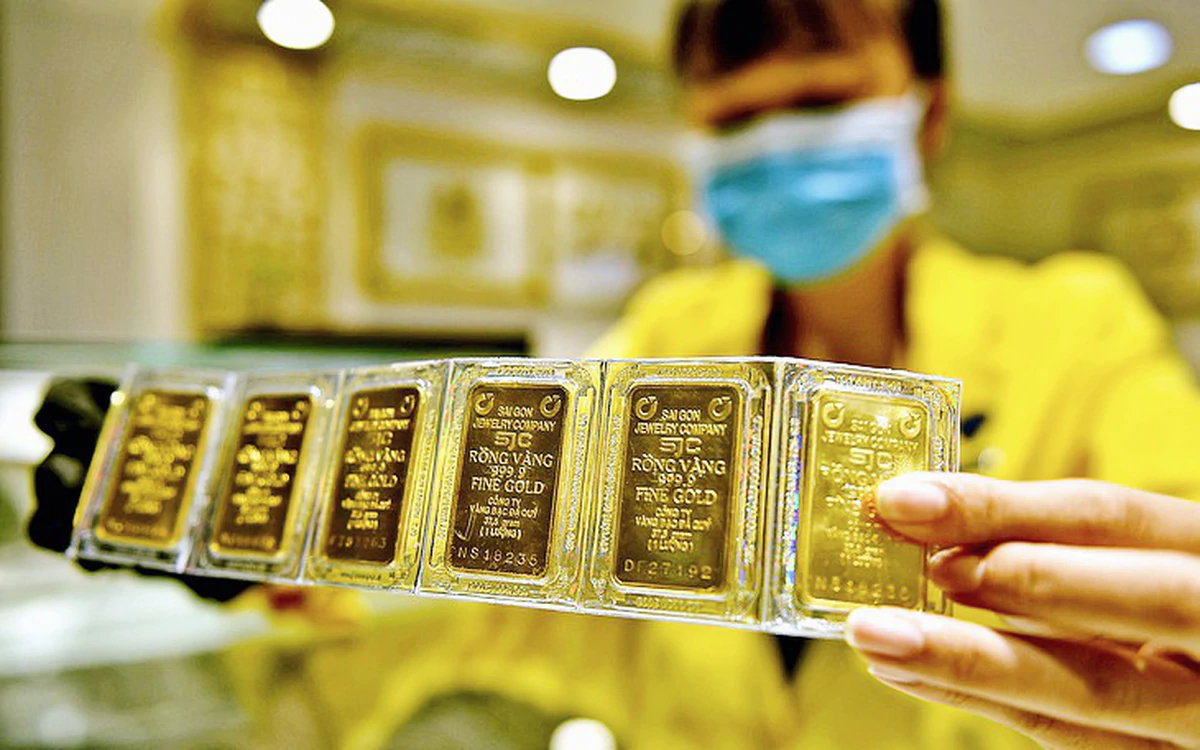
If you want to understand a consumer market, start by asking a simple question: where do people keep their money? In the US, the answer is a bank account, a 401(k), maybe some index funds. In Vietnam, for millions of households, the answer is a gold bar tucked away at home.
Honestly, it’s one of those habits that sounds strange from the outside but makes complete sense once you hear the history behind it.
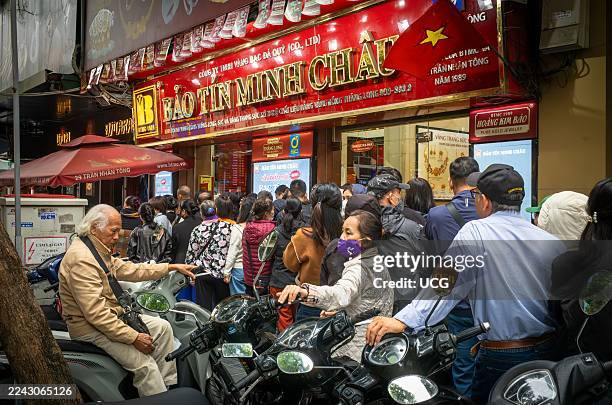
People in Hanoi wait in line outside Bao Tin Minh Chau gold shop to sell gold after the precious metal prices plummeted from record highs.. (Photo by: Andy Soloman/UCG/Universal Images Group via Getty Images)
A savings account you can hold in your hand
Vietnamese families are estimated to hold around 400 tonnes of gold at home, according to government auditors. One National Assembly delegate put private holdings at 400 to 500 tonnes, worth roughly $35 to 40 billion, or close to 8% of GDP. That is a huge pool of wealth sitting completely outside the banking system.
This is not a new habit. Back in 2009, World Gold Council data showed that, relative to income, Vietnamese consumers bought more gold than anyone else on earth: about twice as much as Indians and 44 times as much as Americans. Gold has even served as a unit of account for buying houses and cars. Some families still lend each other gold to build homes, and the loan has to be paid back in gold, not cash.
Why trust a metal over a bank?
The cultural logic makes sense once you look at history. A generation that lived through the triple-digit inflation of the 1980s learned that paper money can melt away, while gold holds its value. Vietnamese people even have a phrase for this kind of money: của để dành, savings that survive inflation and devaluation. Gold is also portable, private, and easy to sell anywhere in the country.
That trust shows up in prices. On October 24, an SJC gold bar sold for VND 141.7 million per tael, about 14% above the world price. Earlier this year the gap was closer to 18%. Vietnamese buyers are willing to pay a big premium for a brand they trust.
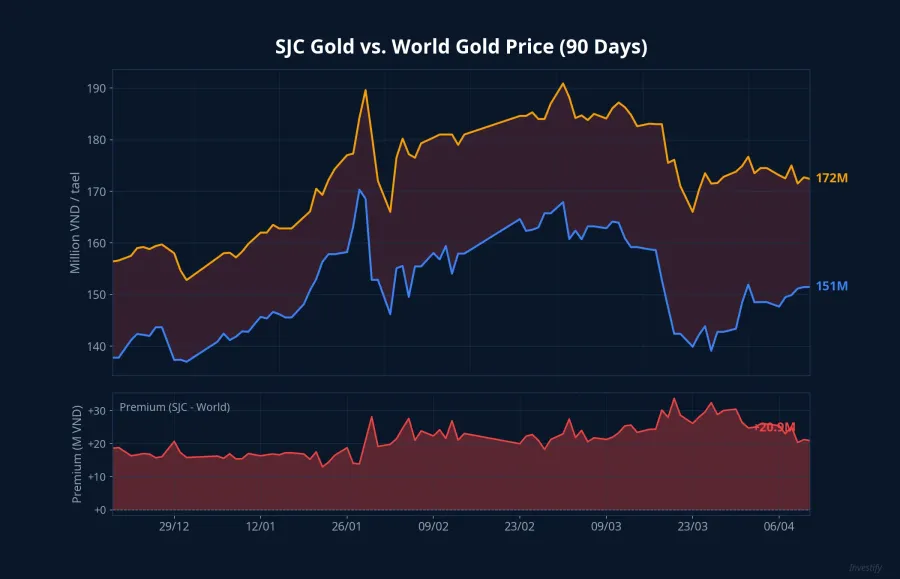
What makes this interesting is the policy side. In August 2025, Vietnam’s government issued Decree 232, ending SJC’s monopoly on gold bar production that had been in place since 2012. A World Gold Council advisor predicted the premium would shrink to just 2 to 3%. More than a year later, it is still in the double digits. Changing the rules is easy. Changing habits built over decades is not.
What this means for international marketers
For anyone entering Vietnam, this is a reminder that the cultural environment shapes even “rational” financial behavior. A few takeaways:
- Banks and fin techs are competing with gold, not just each other. Digital savings products need to borrow gold’s strengths: safety, liquidity, and something that feels tangible.
- Jewelry is partly a financial product. Plain 24k rings are bought for their purity and resale value, not their design. A Western jeweler pushing 14k fashion pieces is selling into a very different mindset.
- Brand trust can be worth a 14% premium. In uncertain environments, consumers pay for reassurance.
The bigger lesson? Before you market anything in a new country, figure out what people trust. In Vietnam, the answer still glitters.
What about your own culture? Is there an asset people trust more than the bank? Let me know in the comments.
AI disclosure: I used ChatGPT to help research and draft this post.
References
- AFP via Free Malaysia Today. (2026, January 30). Soaring gold price a crushing weight in Vietnam.
- The Vietnamese Magazine. (2025, November). Mobilizing Viet Nam’s “People’s Gold”: An impossible task without public trust?
- DTiNews / Financial Times. (2010, June 17). Vietnam’s gold habit weighs down dong.
- BullionStar. Vietnamese gold market.
- The Rio Times. (2026, October). Why Vietnam gold sells 14% above world price.
- ZestLab. (2026, March 19). Vietnam gold crashes 7.5M VND per tael.
- Vietnam Government Portal. (2025, August 27). Viet Nam ends State monopoly on gold bar production.
- Tuoi Tre. (2025, August 28). Ending the SJC gold bar monopoly.