
Social media is one of the most used tools for marketing, as well as a popular form of entertainment for consumers around the world. As of 2023, there are about 4.89 billion users worldwide, and the average social media user bounces across 7 different platforms every month (Sheikh, 2023). Though the general concept is easily understood as an online platform for users to connect and share ideas, the different types of content have many different categorizations. Understanding all of the different forms social media comes in allows organizations to better reach their audience and implement their goals.
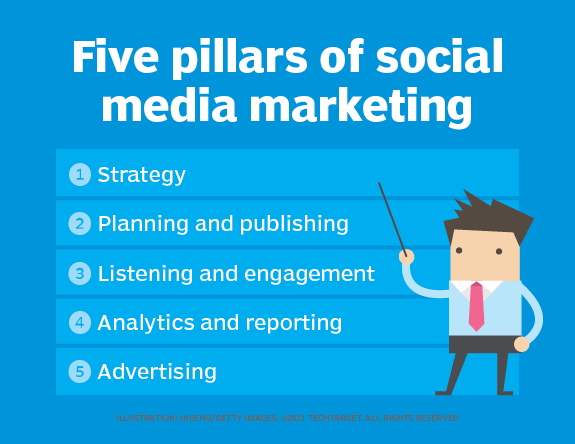
The first classification lies with the four pillars of social media: Social Strategy, Planning & Publishing, Listening & Engagement, Analytics & Reporting, and Advertising.
Social Strategy refers to the overarching strategy for your brands social media presence. It is the first step to establishing your online brand image. To create this, companies should figure out their goals with their social media, as well as the right platform to post on and which content will best reach their intended audience.
Planning & Publishing has to do with the actual publishing of content. As social media is such an oversaturated space, it’s important to ensure key details are in place to get maximum results. This includes seeing what times the target audience would be active (easiest when its a geographic segment in the same time zone), taking care to edit both the content and caption, and understand the analytics of each post. The latter will show views, engagement rate, and how many non-followers may have interacted with the post.
Listening & Engagement allows companies to stay in tune with their online communities. With a strong engagement style, brands can interact personally with their followers, which then encourages these users to share them on their own accounts. Additionally, keeping an eye on comments and direct messages allows companies to have a direct line of feedback which shows them areas which needs improvement.
Analytics & Reporting has to do with the actual metrics behind social media accounts and its content. Simply posting content is not enough to maintain a successful position in the social media space. Companies need to constantly monitor how their content and overall is doing in order to have a real report of its performance. This includes seeing if a newer post has a higher reach than an older one, comparing their positive and negative comments, seeing if other accounts are mentioning them, follower count increase/decrease, etc.
Advertising is one of the most well-known aspects of social media. These ads help brands to reach the maximum amount of users and spread awareness of the company. Typically brands will pay a fee to the social media platform in order to get their content to the top of the explore page and on their target audience’s feeds.
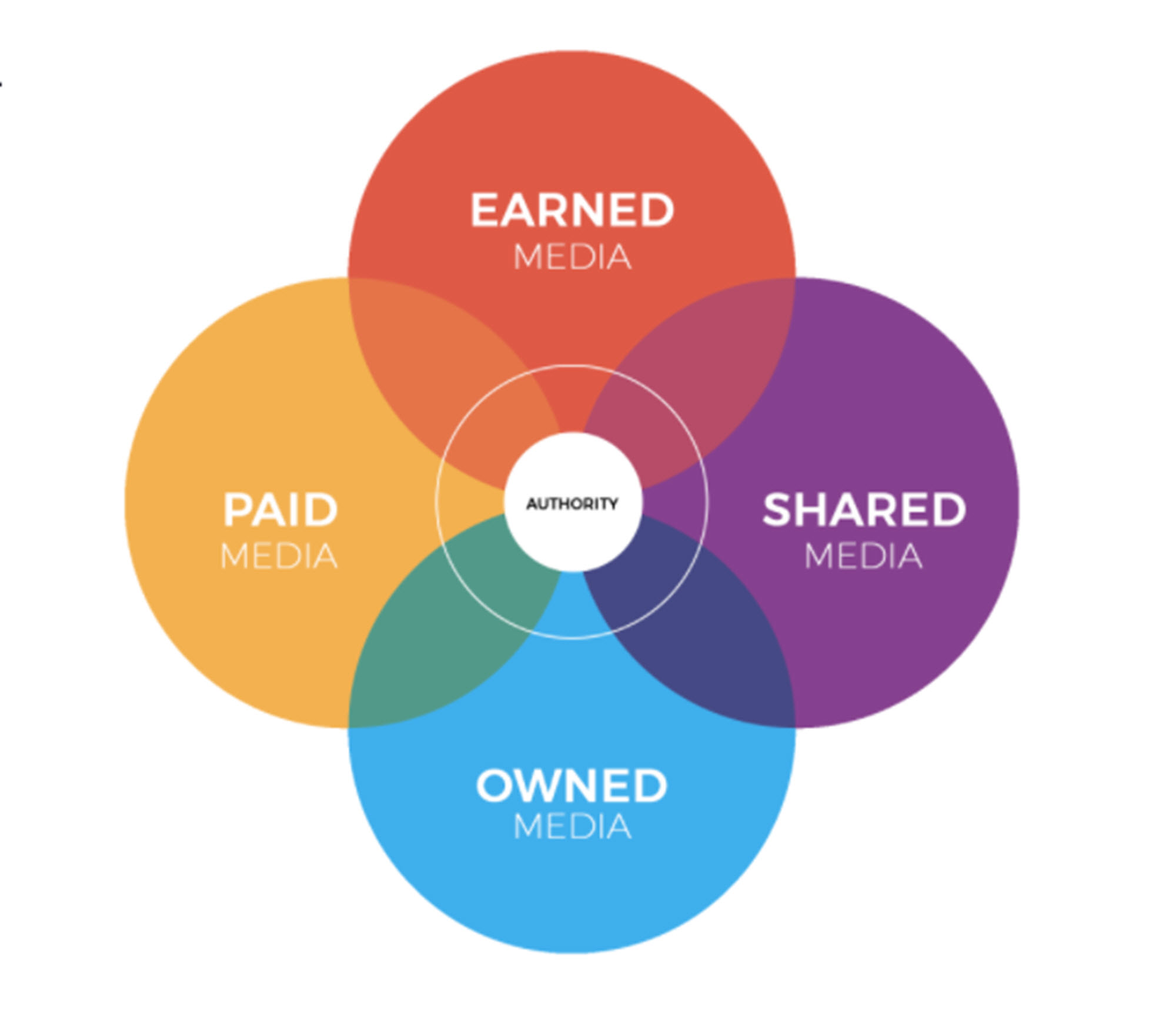
Another important factor to be aware of is the type of content, easily understood with the PESO model (paid, earned, shared, and owned media).
Paid media is content that the company has spent money on. In the social media space, this is commonly seen in influencer marketing or advertisements. Influencer marketing is when companies pay a social media presence to create content revolving around their brand, product, or service. As mentioned earlier, advertisements are promoted content on a social platform paid for by the company in order to reach those who might not already know of the brand.
Earned media is traditionally seen when journalists include a company in an article without any form of payment prompting the review. In today’s digital age, this has transformed into brands pitching bloggers and influencers to publicly post their opinion of the brand or its products.
Shared media stems from online word-of-mouth. When a brand posts on social media, users can comment, share, and repost the content with their own opinions. In many ways, the other three sections of the PESO model can lead to shared media, as it is the fruition of consumer engagement.
Owned media is simply the content the company owns. It encompasses anything that has been created for the brand and by the brand. This could be photos of a fashion company’s new collection posted to their Instagram, or a video with the CEO on the company’s Youtube. Owned media assets are the foundation of a social media strategy, as “you can’t launch a campaign without telling a story or sharing a message,” (Turgeon, 2023).
Overall, creating and maintaining a social media presence is not as easy as it may seem. However, by taking the time to learn, understand, and implement the above concepts, social media teams may be able to keep their brands at the top of consumers’ feeds.
Resources:
https://www.sfwpexperts.com/inbound-marketing-series-what-is-social-media-marketing-smm-5-core-pillars-of-social-media-marketing/
https://www.brandpoint.com/blog/earned-owned-paid-media/