One ad, 140 countries, five AI specialists. That was roughly the math behind Coca-Cola’s 2025 “Holidays Are Coming” spot. Generative AI promises the holy grail of international marketing: the cost savings of standardization with the local relevance of adaptation. But the last 12 months show the hard part was never making the versions. It’s knowing whether each one will land.
The scale pitch
For its 2025 holiday ad, Coca-Cola worked with WPP and two AI studios, Silverside and Secret Level. Silverside’s team prompted and refined more than 70,000 video clips, and the campaign ran in 140 countries (Implicator). After the 2024 ad was mocked for creepy, uncanny humans, the 2025 version swapped people for polar bears, bunnies and sloths. Critics still called it an imitation of nostalgia rather than the real thing (TechRadar).
The platforms are pushing the same idea down to every advertiser. Meta launched AI dubbing for Facebook and Instagram video ads in late 2025, starting with English-to-Spanish only (Slator). It has since folded dubbing into its Advantage+ creative tools so brands can re-voice one ad for new language markets (Best Media Info). In theory, any small brand can now “go global” with a few clicks.
When local goes wrong
Then there’s McDonald’s Netherlands. In December 2025 it released a 45-second, mostly AI-generated spot from TBWA\Neboko and The Sweetshop’s AI unit, built around holiday stress in the Netherlands. Viewers hated both the AI look and the cynical tone. The brand made the video private three days later (Wikipedia).
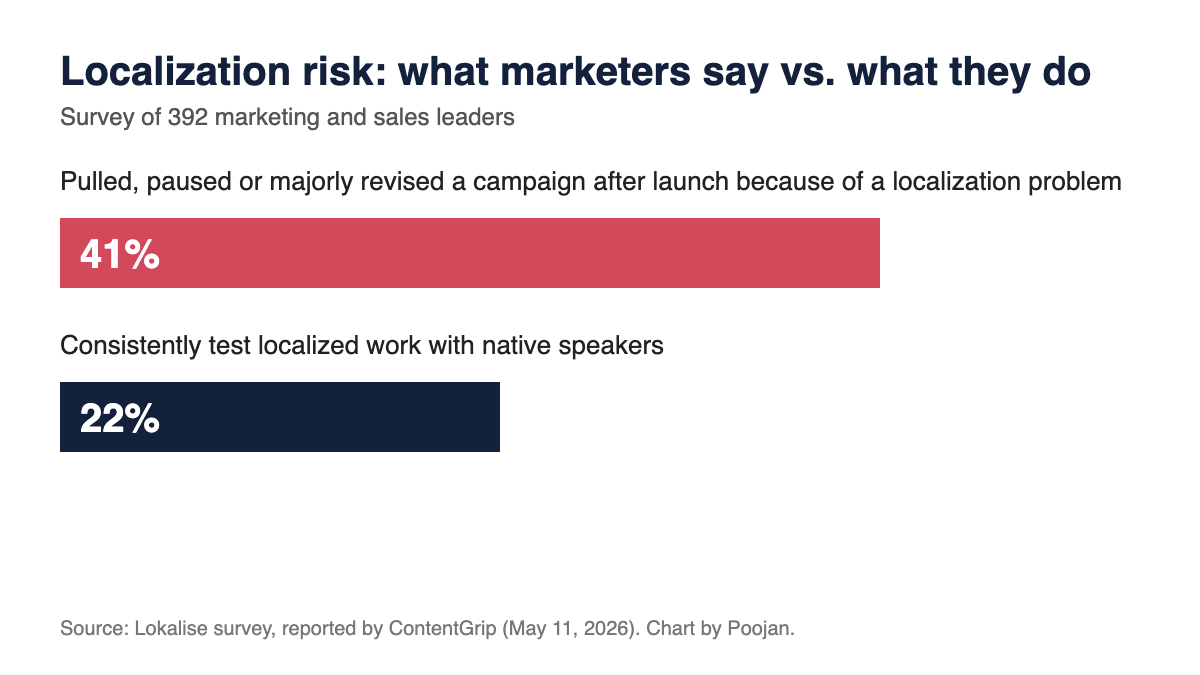
What strikes me is that this was a local ad made by a local agency, and it still misread the local mood. If AI-assisted creative can miss at home, imagine 30 automatically dubbed versions nobody in-market has watched. Research backs that up. In a Lokalise survey of 392 marketing and sales leaders, 41% said they had pulled, paused or majorly revised a campaign after launch because of a localization problem. Only 22% consistently test localized work with native speakers. Their top area for human review? Cultural appropriateness (ContentGrip).
The regulator in the room
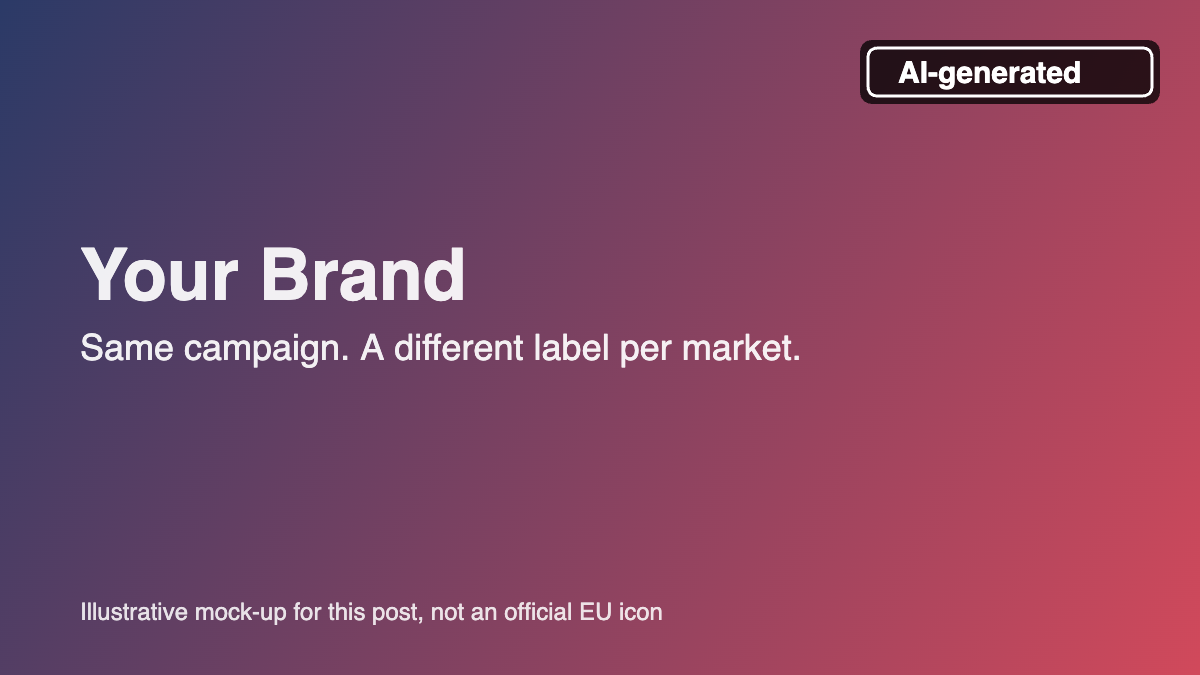
There’s also a legal layer that changes country by country. Since August 2, 2026, the EU AI Act’s Article 50 requires clear labels on AI-generated or manipulated images, audio and video that could falsely pass as real. That reaches non-EU brands whose ads are distributed into the EU, with fines up to €15 million or 3% of global turnover (Lewis Silkin). So the same AI ad might need a disclosure in Berlin but not in Boston. That’s a new kind of adaptation: not cultural, but regulatory.
My takeaway
AI makes the execution of adaptation nearly free, but not the judgment. The old standardize-vs-adapt question is turning into “automate vs. curate.” Brands that win will use AI to make many versions and humans in each market to decide which ones should exist.
My biggest takeaway is how the rejected ads failed. They looked uncanny and eerie, felt wrong for the product and the market, and were quickly written off as “AI slop.” Honestly, it’s confusing how any human in the loop pressed “okay” on publishing them, and maybe it’s their judgment that deserves the scrutiny. Still, the poor quality of these ads makes me think the real problem is that the technology simply isn’t good enough yet. Once it improves to the point where AI footage is indistinguishable from human animation or live action, this problem might not persist.
Will people care about the “AI label?” Even if brands have to include AI labeling in the EU, if the ad works emotionally and aesthetically, will people really care that much? At the end of the day, advertising exists to create demand for a specific product or service. It is transactional.
What do you think: is AI localization a shortcut to global reach, or a shortcut to global mistakes? Tell me in the comments.
AI Disclosure
I used AI to organize my thoughts into a coherent and chronological post. I also used it to research the specific companies responsible for the advertisements and find articles explaining the debacle.
Sources
- Coca-Cola debuts AI holiday ads; animals replace actors after 2024 backlash, Implicator, Nov 4, 2025
- Coca-Cola faces backlash again for another AI ad, TechRadar, Nov 4, 2025
- Meta targets advertisers with AI dubbing, Slator
- Meta adds AI dubbing, persona ads and creator APIs, Best Media Info
- It’s the Most Terrible Time of the Year, Wikipedia
- Lokalise study reveals localization mistakes hurting brands, ContentGrip, May 11, 2026
- The new AI labelling rules for deployers in the advertising supply chain, Lewis Silkin, Jul 31, 2026