When Coca-Cola first reached China, shopkeepers “translated” the name Coca-Cola themselves. They picked any characters that sounded roughly like “Coca-Cola,” and some signs ended up reading as nonsense like “bite the wax tadpole.” Coca-Cola later took control and registered 可口可乐 (kě kǒu kě lè), which sounds like the original and means roughly “tasty fun” (Quartz).
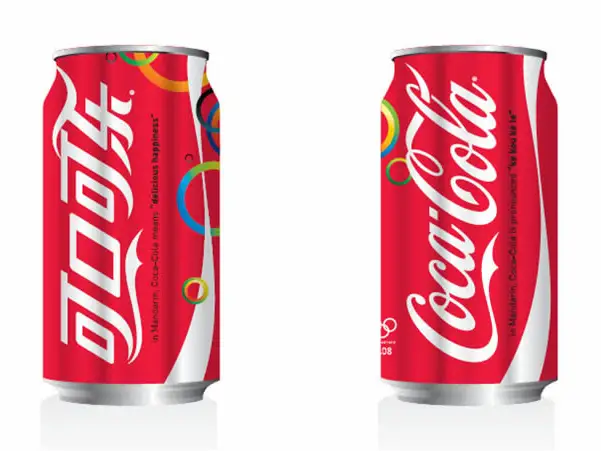
Coca-Cola’s solution wasn’t to literally translate the English spelling of Coca-Cola, it was to create a new copy that kept the sound, feeling, and promise of the beverage. In marketing, this is referred to as transcreation (adapting a message from one language and culture to another while preserving its original intent, style, tone, and emotional impact). I believe transcreation is the skill thats separates global brands from local brands.
4 Brands, 4 Strategies:
McDonald’s: dialing “love” down. “I’m lovin’ it” became “Me encanta” in Spanish, closer to “I really like it,” because amor sounds romantic when aimed at a burger. In China it became 我就喜欢 (“I just like it”). The word for love is rarely said out loud there (Supertext).
Haribo: rewriting the rhyme. The German jingle “Haribo macht Kinder froh” doesn’t survive translation. So English got its own rhyme (“Kids and grown-ups love it so – the happy world of Haribo”) and French another (“c’est beau la vie, pour les grands et les petits”). The words change; the singsong tone stays (Supertext).
Volkswagen: refusing to translate. “Das Auto.” ran in German around the world. VW dropped it after its diesel-emissions scandal, a reminder that a standardized slogan carries a scandal everywhere at once (Supertext).
Mixue: transcreation running the other way. The Chinese chain 蜜雪冰城 (literally “honey snow ice city”) goes abroad simply as “Mixue,” fronted by its Snow King mascot (Wikipedia). Its jingle sets the brand slogan to “Oh! Susanna,” a 19th-century American folk tune. In June 2021 the song went viral, with 1.17 billion plays on its Douyin hashtag and a 14-country, 20-language compilation (Jiemian). In December 2025 Mixue opened its first U.S. store on Hollywood Blvd, selling $1.19 soft-serve (Fast Casual). An American melody is coming home inside a Chinese brand.
What this means for international marketers
These cases sit on the standardization vs. adaptation spectrum. VW standardized because country of origin was the selling point. McDonald’s and Haribo adapted the words but kept one global feeling, a “glocal” approach. Coca-Cola’s Chinese name shows phono-semantic matching: a name that keeps the sound and adds a positive meaning (Quartz).
The newest twist is that Chinese brands now do the transcreating. Chery created Omoda (“O” for oxygen, “Moda” for modern) and sister brand Jaecoo only for overseas markets; neither is sold in China (Wikipedia). That’s transcreation at the brand level: rather than translate “Chery,” invent a name built for Madrid and Mexico City.
My rule of thumb: translate information, transcreate emotion. Ingredients and safety warnings need accuracy. Slogans, jingles and names need a local writer who knows what makes people smile.
AI Disclosure
I used AI to find a list of brands that transcreated their identity. Mainly all the western brands when they went to Asia and Europe, and Chinese brands that went west. I also used AI to organize my thoughts into a cohesive structured post.
Sources
- Quartz: phono-semantic matching in corporate branding
- Supertext: slogan translation and transcreation
- Wikipedia: Mixue Ice Cream & Tea
- Jiemian: Mixue theme song goes viral (June 2021, in Chinese)
- Fast Casual: Mixue makes American debut in Hollywood (Dec 2025)
- Wikipedia: Omoda
- YouTube: MIXUE English upgraded theme song (official MIXUE蜜雪冰城 channel)