One Tournament, Four Audiences
When Mexico played England this summer, 23.1 million people in the U.S. watched on Telemundo. All of them watched in Spanish, in a country where brands still tend to plan in English first. That one number shows the communications problem of World Cup 2026. FIFA sold it as one tournament across three host countries. For marketers it was at least four audiences: the U.S., Canada, Mexico, and the bilingual U.S. Hispanic market, which sits inside the first one but doesn’t behave like it. So how did sponsors speak to all of them at once?
One Platform, Three Accents
Coca-Cola’s global brief: feelings. Coke launched its World Cup campaign on January 27, 2026. It’s built on fans riding the emotional rollercoaster of the tournament, with three films (“Bubbling Up,” “Uncanned Emotions,” “No Better Feeling”) and a remake of Van Halen’s “Jump” featuring J Balvin, Amber Mark, Steve Vai and Travis Barker. The anthem’s lineup is a cross-border choice in its own right: a Colombian reggaetón star sharing a track with American rock musicians.
Canada: same idea, bilingual can. In Canada the global idea showed up mostly at retail. Coke made a bilingual “Host Country Canada” commemorative can, bilingual Panini sticker packs, QR-code contests, and fan zones in Toronto and Vancouver. This is localization through packaging and the store aisle.
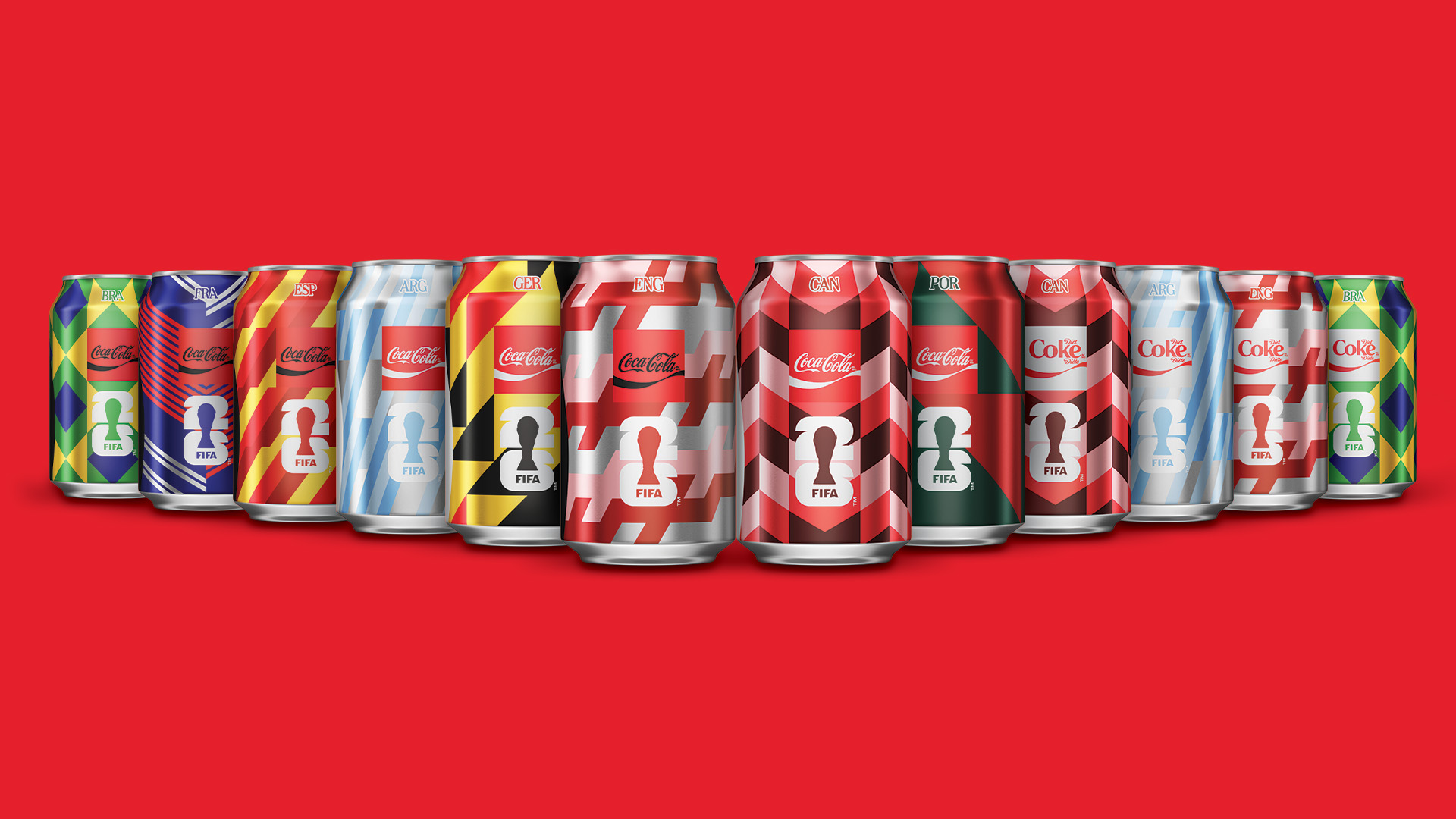
Mexico: same idea, harder truth. In Mexico, Coca-Cola and Grey México made “Sintamos Juntos” (“Let’s Feel Together”). The feelings theme carries over, but the creative line is very Mexican: Mexico’s toughest rival is Mexico. It names the sadness and anguish fans know well and turns watching the team into a shared national ritual. Global brands rarely get to say that kind of self-aware line, whereas a local team can without risking offending the country it’s playing in.
The Mexico campaign also ran into a problem the U.S. ad never faced. In February, a lawyer from consumer group El Poder del Consumidor filed a complaint with Mexico’s health regulator (Cofepris) and its consumer agency (Profeco). She argued that the ads showed bottles with the mandatory front-of-pack warning seals only partly visible, and asked for the campaign to be pulled. Mexico requires octagon warning labels on sugary drinks, so a product shot that works in Atlanta can be a compliance risk in Mexico City.
The U.S. Hispanic market stopped being an add-on. Per TheWrap, nearly half of U.S. World Cup viewers watched in Spanish. NBCUniversal said about 90% of Telemundo’s ad inventory sold before kickoff, with commitments double 2022’s. The final drew about 63 million U.S. viewers across Fox and Telemundo, and 23.9 million of them watched in Spanish.
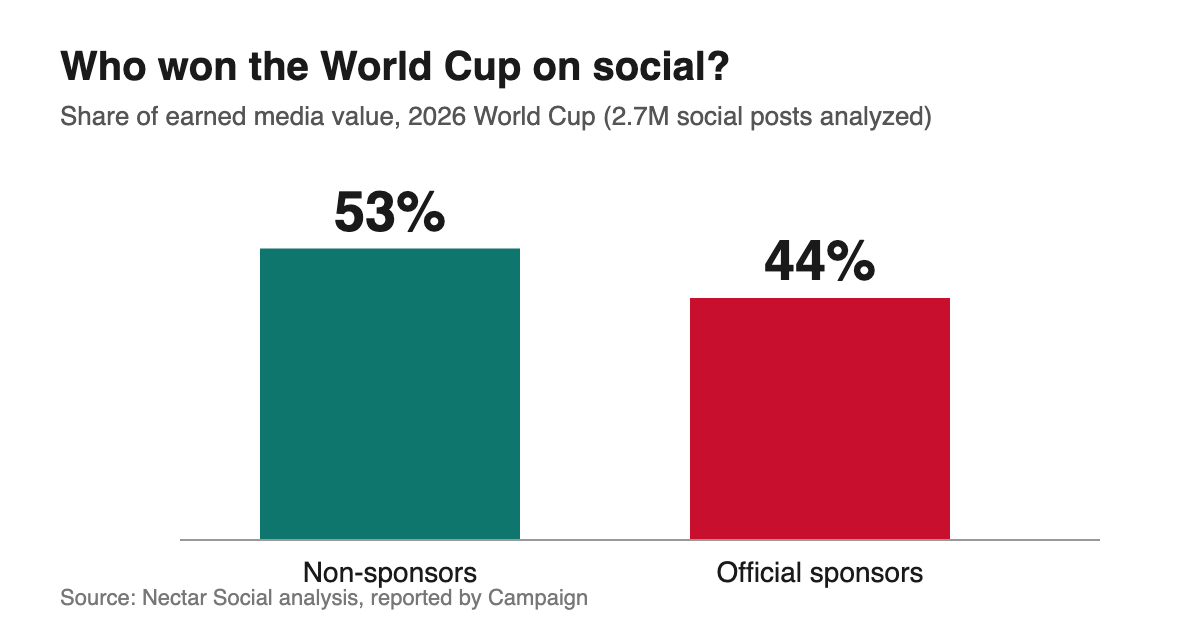
Meanwhile, non-sponsors localized faster. Tim Hortons, which isn’t an official sponsor, leaned on its Timbits youth soccer program. Volkswagen Canada handed out two-sided car flags pairing Canada with a heritage nation, after finding that over half of Canadians with roots elsewhere feel one flag doesn’t cover their World Cup identity. A Nectar Social analysis of 2.7 million social posts found non-sponsors took 53% of earned media value to sponsors’ 44%. Coca-Cola reached about 250 million views but only 1.3% engagement.
What This Says About Global Communications
Coke’s World Cup is a textbook case of “glocal” communication: standardize the emotional idea, adapt how it’s expressed. The global platform (feel everything, together) travelled fine. What changed was the carrier. In Canada it was bilingual packaging. In Mexico it was a culturally specific line about self-doubt. In the U.S. the biggest change wasn’t the creative at all. It was the media plan, as Spanish-language TV became a main channel instead of a side buy.
Two lessons I’d take away:
- Regulation is part of the communication environment. We usually treat it as a legal checklist. Mexico’s warning-seal rules show it can shape the creative itself: how a bottle is held, framed and cropped. Ads that are fine in one co-host country can draw a formal complaint in another.
- Being an official sponsor buys you rights, not relevance. The brands that did best on social often understood one local community very well, like Canadian kids’ soccer or immigrant families with two flags. They didn’t try to speak for three countries at once.
Sources
- Coca-Cola Puts Fan Emotions First in FIFA World Cup 2026 Campaign — Coca-Cola Company, Jan 27, 2026
- Coca-Cola Launches FIFA World Cup 2026 Campaign in Canada — Retail Insider, Mar 2026
- Coca-Cola y Grey México presentan “Sintamos Juntos” — Mercado, Mar 20, 2026
- Complaint to Cofepris and Profeco on Coca-Cola’s World Cup advertising — El Poder del Consumidor, Feb 23, 2026 (Spanish PDF)
- The World Cup Is Cementing Telemundo as a Media Powerhouse — TheWrap, Jul 10, 2026
- Record World Cup ratings deliver marketing lessons and opportunities for brands — Campaign, Jul 2026
- Our Favourite FIFA Campaigns: Canadian Edition — Marketing News Canada, Jun 17, 2026
- Non-sponsors outperformed paid partners at 2026 World Cup, report finds — Campaign (Nectar Social data)