How the Hollywood studios are trying to use virality to boost the success of their films.
By Ethan Mantaro

This past week, some of America’s greatest national monuments were invaded by a mob of damned dirty apes riding horseback. A stunt marketing campaign for the new entry in the decades spanning Planet of the Apes series, these performers trotted the soft sands of Venice Beach, stood in the shadow of the towering Golden Gate Bridge, and gazed across the water to the iconic Statue of Liberty.
Now, you may be asking, “What is this all for?”
If you’ve ever seen the ending of the original Planet of the Apes (1968), you’ll have some idea of the reference point, but this promotional campaign continues a trend of major Hollywood film studios trying to create viral promotions.
As consumer attention continues its progression away from traditional marketing channels (television, radio, print, etc.) and theaters are often in the news for what many claim to be ‘the death of movie theaters’, studios have turned to the one place where they feel they might be able to reach a wide audience: social media.
Precedent for viral social media marketing leading to box office success does exist with Paramount’s 2022 hit Smile still standing as the premier example. In the film, a doctor fears for her life after a smiling entity begins stalking her, telling her that she will die.
One week before the film was set to release and right in the heat of the final week of the MLB season, Paramount marketers sent smiling actors into the stands of primetime baseball games. Seen below, the campaign found great success on Twitter with many fans taking notice including several TV stations and a major player in baseball media, Jomboy, who posted several clips of the stunts garnering tens of thousands of likes.
The film went on to gross $217.4 million on a $17 million budget and a sequel is slated to be released later this year right in the heat of playoff baseball. Could we see them try the same stunt again or will they opt for a different type of social media marketing campaign?
Perhaps they focus less on the stunts and more on organic social media growth like M3GAN did less than a month later with their campaign that allowed them to reach $180 million worldwide.
The film’s story is simple enough: Girl’s parents die. Girl goes into the care of her aunt who built a life-size AI companion doll (M3GAN) for work. Girl befriends said doll. Doll goes on killing rampage to ‘protect’ girl.
It’s a tale as old as time.
Though it wasn’t the murder or the sob story that earned the film over 1 billion views on TikTok. It was a silly dance placed towards the end of the trailer that sparked a mania for the film.
It exploded on social instantly. Users on TikTok did their best impressions of the dance, which is done to the tune of Taylor Swift’s It’s Nice to Have a Friend, and hashtags like #M3GAN or #M3GANDANCE earned hundreds of millions of views on TikTok alone.
Unlike Smile, this social media sensation took over months before the film’s release giving it time to grow and make a second push with further trailers. But, like Smile, its blow-up happened on the perfect platform.
Smile‘s marketing focused events that occurred at a specific time and place and were broadcast exclusively during those windows. For people noticing the promo in real time, Twitter (now X) was the perfect platform. It allowed them to flock to trending tweets and get live updates, sparking a mass conversation and building buzz rapidly within that specified window.
M3GAN, on the other hand, found success on a platform that had become famous for users imitating specific dances on video. It was a match made in heaven and was a phenomenon that would not have occurred even five years prior when there was no platform like TikTok that had a large user base.
However, the filmmakers and studio never expected this to become what it did. The director, Gerard Johnstone, admits that the dance was included in the film because of his experience seeing young woman and girls bond over activities like making TikTok dances, but that he never thought of it as something that would go viral.
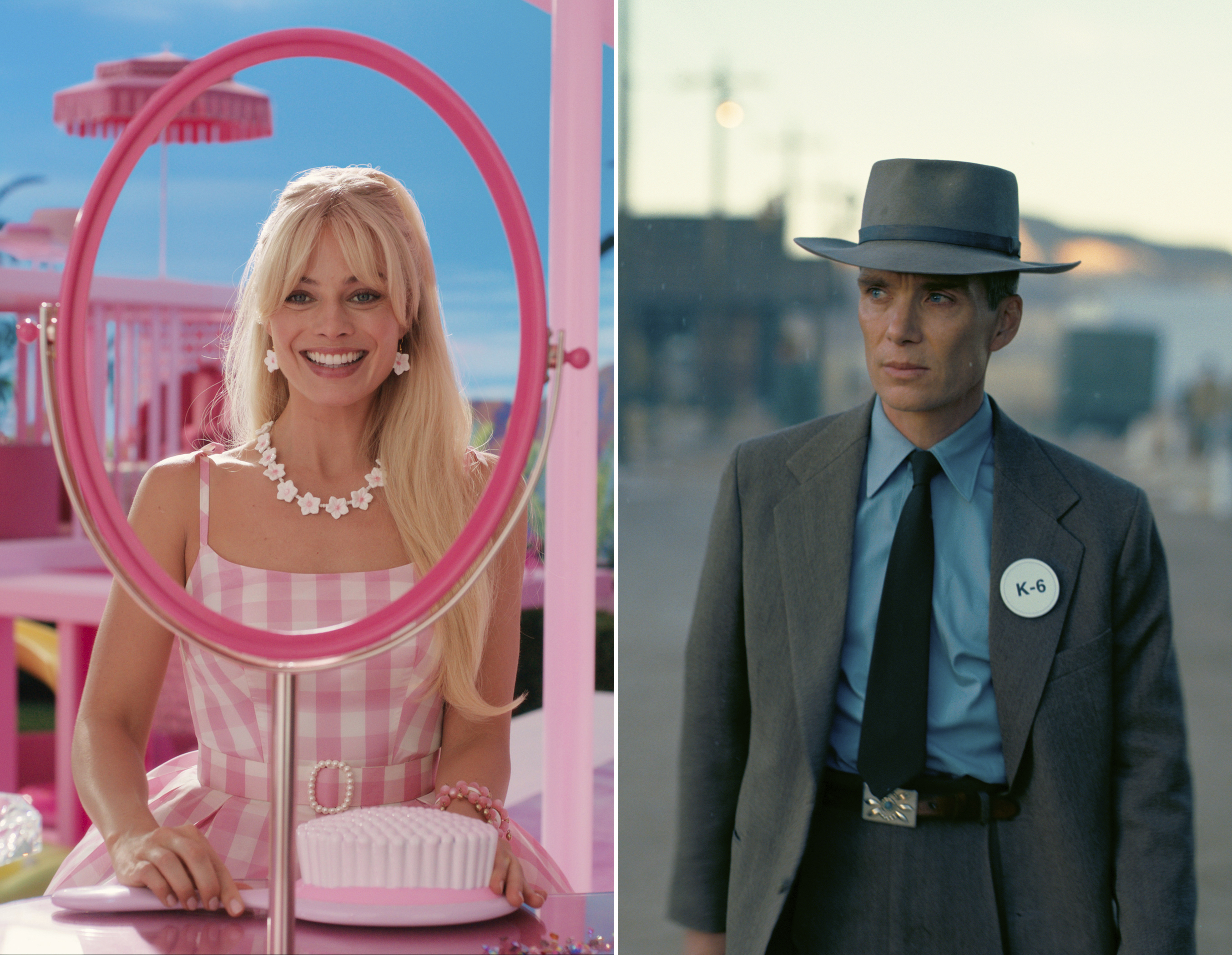
The same phenomena happened last year with the two of the three biggest movies at the box office, Barbie and Oppenheimer, had a smash promotional campaign seemingly fall into their laps after fans noticed they would be releasing on the same day.
Barbenheimer, as it was called, became one of the biggest cultural events for film in the past decade, breaking box office records and finding its place as the fourth highest domestic opening weekend ever. And it wasn’t even planned.
The studios credits organic social media engagement for sparking the match that would become Barbenheimer, saying they had no part in its beginning. Just that, as with Universal and the M3GAN dance, they leaned into it.
Though they had to be cautious. Sometimes when a studio looks to organic viral promotions marketing aid, it can blow up in their face. Dana Nussbaum, EVP of worldwide marketing for Warner Bros., the studio behind Barbie, said of the campaign:
“…we were very careful to making sure that we were into the spirit of personalizing this campaign that we were letting audiences decide how they engage with it.”
It was a fine line they had to walk in order to keep the energy going, but not interjecting themselves too much to corporate-ify the fun. Thankfully, it worked out, but this type of guiding hand can be dangerous and Nussbaum seemed to know it.
Probably the greatest negative example of studio reaction to an organic campaign comes from Sony. Morbius (2022), a vampire movie based on the Marvel comics anti-hero, was considered a critical and box office flop when it was released despite a major marketing push from the studio. But after it left theaters, memes of the film began popping up all over social media claiming it to be secretly great or making up fun quotes like ‘It’s Morbin’ time.
Seeing the widespread success of these posts online, Sony decided to re-release the film back into theaters, hoping to capitalize on the memes, only for it to bomb again, making just $85,000 from 1,000 theaters on its first day back.
Some may say that this failure was easily predictable and it was foolhardy to re-release it, especially after it performed so poorly the first time and the fact that all of these memes were poking fun at it. Maybe it was, but it’s not that simple.
Negative social media engagement isn’t necessarily a bad thing. There are certainly examples of movies performing despite negative social media reaction. Last August, Gran Turismo went somewhat viral for its constant push that the film was ‘Based on a True Story.’ It seemed that the phrase was in every trailer, social account, post, etc. They even put it in the title.
People online cracked jokes and made memes. Still, the film made $122 million worldwide.
Sound of Freedom (2023) was plagued with negative press and social media reactions due to accusations of QAnon alignment and sexual misconduct of people involved in making the film. It pushed through to become the surprise hit of the summer and made $250 million worldwide.
Each of these examples serve to the primary question that movie marketers must be asking themselves: If the atmosphere of social media is so volatile, yet we need it to promote our films, how do we position our films in a way that serves their box office performance?
It’s impossible to know the outcome that social media users will have on a film. It could be that they react positively and engage with a given promotion. Or they could even start one themselves. But the biggest issue for studios is that, once it’s begun, they have very little control over where it goes.
So, what do they do? Well, they can start with some basics.
Social monitoring and listening are key. Their reactions are all they have. If something isn’t going their way, they need to be able to do what they can to fix it. If something is working, then they need to make note of it and support it.
This includes being on the right platforms for a given film. For this, they need to know their audience. Barbie and Oppenheimer had the biggest success on TikTok and Instagram, but, in some areas, Oppenheimer found a strong following on Facebook as well. Given the historical context of the film and the age demographics of Facebook relative to the other two platforms, this makes sense.
Finally, it’s not bad to experiment. They say all press is good press and box office predictions are made primarily by surveying consumers as to which films they know are being released and which ones they plan to see. So, even if a big swing like Smile‘s doesn’t land as expected, it still may result in an awareness boost which could lead to a few extra dollars in the end.
At least that’s what 20th Century Studios is hoping for as they cross the country dressed as apes.
Sources:
Busis, Hillary. “‘Barbie’ and ‘Oppenheimer’ Blow up the Box Office.” Vanity Fair, Vanity Fair, 23 July 2023, www.vanityfair.com/hollywood/2023/07/barbie-oppenheimer-box-office-records.
Clough, Jason, et al. “‘barbenheimer’ and Redefining Movie Marketing Strategies.” Comscore, Inc., 2 Aug. 2023, www.comscore.com/Insights/Blog/Barbenheimer-Redefining-Movie-Marketing-Strategies.
Coyle, Jake. “Behind the Box Office the Tracking of Movie Openings.” Foster’s Daily Democrat, Fosters Daily Democrat, 4 Aug. 2006, www.fosters.com/story/lifestyle/2006/08/06/behind-box-office-tracking-movie/52675396007.
Goldsmith, Jill. “‘barbenheimer’ Was ‘Delightful Surprise’ to Warner Bros; ‘at the Outset, People Wanted to Pit the Two Films against Each Other,’ Studio Marketer Tells Ad Confab.” Deadline, Deadline, 18 Oct. 2023, www.deadline.com/2023/10/barbenheimer-barbie-warner-bros-pictures-advertising-week-1235576849/.
Guy, Zoe. “Morbius Out-Flops Itself, Viral Twitter Memes Blamed.” Vulture, Vulture, 6 June 2022, www.vulture.com/2022/06/morbius-rerelease-flops-memes.html.
McArdle, Tommy. “Apes on Horseback Invade N.Y.C. in Wild Marketing Campaign for New Sequel – See the Photos.” Peoplemag, PEOPLE, 29 Apr. 2024, people.com/apes-on-horses-invade-nyc-wild-marketing-campaign-new-sequel-photos-8640339.
Rosenblatt, Kalhan. “‘M3GAN’ Is an Internet Star Thanks to Her TikTok-Esque Dance.” NBCNews.Com, NBCUniversal News Group, 9 Jan. 2023, www.nbcnews.com/pop-culture/pop-culture-news/m3gan-internet-star-viral-dance-rcna64650.
“Sound of Freedom Movie: Controversies, Allegations, and Streaming Future: Explained.” The Economic Times, 1 Jan. 2024, economictimes.indiatimes.com/news/international/us/sound-of-freedom-movie-controversies-allegations-and-streaming-future-explained/articleshow/106456476.cms?from=mdr#.